




Automated Assembly System Explained: Process and Features
![Automated Assembly System Explained: Process, Features, and Future Scope [2025]](https://buzzwithai.com/wp-content/uploads/2025/08/2151977854.webp "Automated Assembly System Explained: Process and Features 1")
Table of Contents
Have you heard anywhere about Automated Assembly System? This is what we are going to discuss here in this informational post.
The Evolution of Automated Assembly Systems
When Henry Ford debuted the moving assembly line in the early twentieth century, a manufacturing revolution was born. What began as a manufacturing marvel for the automotive sector quickly branched out to all sectors, and manufacturing was changed forever. Mass production became a reality, bringing a new scale and speed to manufacturing that had never been seen before. Prices fell, efficiency increased, and product costs became affordable for the masses.
Fast forward to today, and the assembly line story has begun a new chapter. With global markets competing at an all-time high in the history of the world, its no longer a conversation about manual efficiency — it’s about automated assembly systems. Automated assembly systems integrate robotics, artificial intelligence, machine vision, and smart sensors to achieve productivity and precision levels that would never be possible in a traditional assembly line.
The benefits are clear. Automated assembly allows manufacturers to:
- Improve productivity by operating machines continuously with minimal downtime.
- Improve quality assurance, as sophisticated sensors have the capability to identify even the slightest defects.
- Lower costs associated with waste, mistakes, and resource consumption.
- React to shifting consumer demands more readily with flexible, reprogrammable systems.
One core advantage of modern automation is its versatility. Whether simple robotic arms performing repetitive tasks (think car assembly or electronic assembly) or fully integrated intelligent production systems, systems can be configured for a diverse range of needs in any industry — automotive, electronics, pharmaceuticals, and consumer products.
For us as manufacturers, engineers, and business leaders, automation is not about keeping pace with what we’ve done before; it’s about being ahead of the innovation curve. Manufacturers can increase their production capacity and gain competitive advantage, engineers can utilize their creativity to design workflows to be smarter, safer, more reliable and, business owners can often see a return on their investment fairly quickly as automation increases efficiency and reduces operational costs.
In many ways, automated assembly systems have gone beyond tools for production and have emerged as the foundation upon which innovation driven industries are built.
What is Assembly Line Automation?
Automation of assembly lines, or assembly line automation, refers to utilizing smart machines and technology to increase the speed and efficiency of production while decreasing reliance on labor. Rather than relying on people to do repetitive or slow tasks, companies use robotics, software, and intelligent systems to assemble a product with consistent quality.
Previously, assembly lines used in manufacturing traditionally relied on human labor—in which workers assembled components, inspected products, and moved materials from one process to another by hand. Today, assembly line automation, in various forms, has become a reality. We can distinguish at least three distinct forms of assembly line automation:
- Manual Assembly Lines – All tasks are carried out by human workers.
- Semi-Automated Lines – A blend of human effort and automated tools for greater efficiency.
- Fully Automated Lines – Smart robots and machines perform the entire process with little or no human intervention.
Key Components of Assembly Line Automation
- Industrial Robots
Robots handle repetitive and high-precision jobs like welding, painting, drilling, and assembly. Modern robots are programmable, flexible, and often paired with other automation tools to perform complex sequences flawlessly. - AGVs / AMRs (Automated Guided Vehicles / Autonomous Mobile Robots)
These driverless vehicles transport materials and products across the factory floor. Equipped with sensors and mapping systems, they can navigate safely around workers and equipment, ensuring smooth material flow without delays. - Robotic Arms
Highly versatile machines that can pick, place, weld, screw, or paint with extreme accuracy. Robotic arms can be reprogrammed for different tasks, making them a long-term investment for various production needs. - Conveyor Systems
Conveyors act as the backbone of any automated line by moving parts seamlessly between stations. They can be tailored for specific product types and dramatically reduce manual handling, boosting both speed and safety. - Sensors & Vision Systems
These act like the “eyes and ears” of the system. Sensors detect defects, check alignment, and track performance. Vision systems, powered by cameras and AI, guide robots, verify product quality, and catch errors before they become costly. - Control Systems & Software
The brain of the operation. These systems ensure every machine, robot, and conveyor works in sync. Modern software allows real-time monitoring, data collection, predictive maintenance, and even AI-driven decision-making for smoother operations.
Types of Automated Assembly Systems
One of the most important considerations when designing a product with automation in mind is how the assembly system is configured. The flow of components through the production line almost always defines the speed and flexibility of the system, as well as its overall efficiency. Automated assembly systems are typically categorized based on the type of work transfer system that they deploy. There are different transfer methods of transferring an assembly where each has its own advantages and best-fit applications.
- Continuous Transfer System – Parts move along the line, non-stop; good for fast, uncomplicated tasks.
- Synchronous Transfer System – All parts move together in fixed steps; uses fixed programmable times to assure the same cycle time.
- Asynchronous Transfer System – Parts move independently; reduces bottlenecks, suitable for complicated assemblies.
- Stationary Base Part Systems – Product is fixed while tools move around the product; suitable for large and heavy things.
Exploring the Different Types of Assembly Line Automation
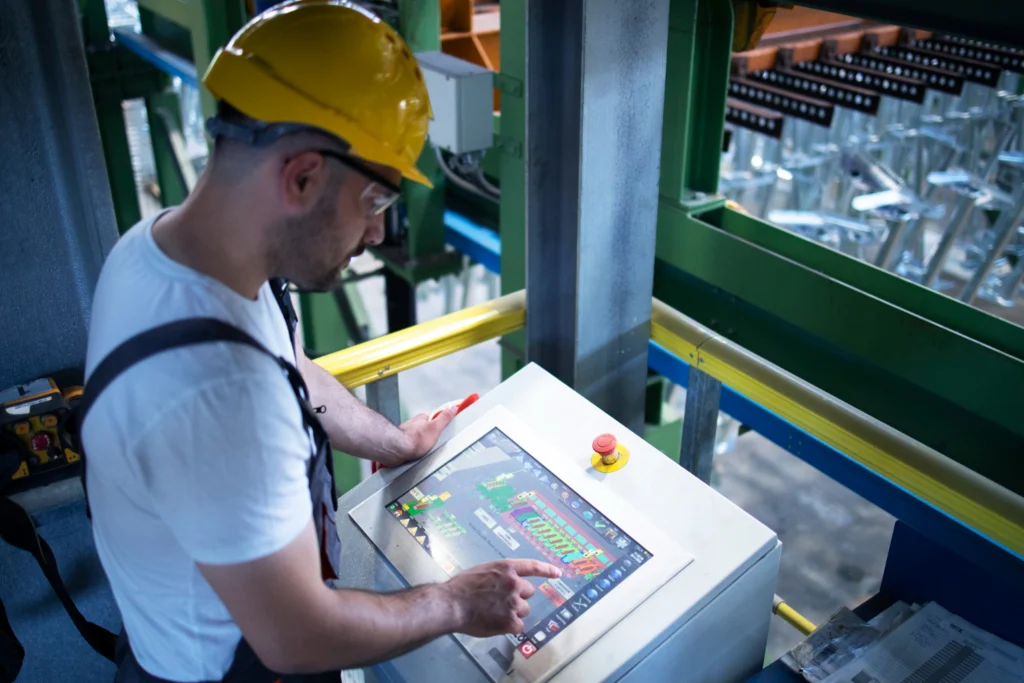
Over the years, assembly line automation has taken many forms—each designed to meet different manufacturing goals. From mass-producing identical products to adapting quickly to customer demands, automation has reshaped the way industries build and deliver. Let’s break down the main types:
Fixed Automation
Fixed automation depends on custom, single-purpose machines. Once designed and built, these fixed automation machines are perfect for running mass production consistently and with high volume. For example, automotive parts or electronics components are typically produced through fixed automation because of the need for speed and consistency. Fixed automation does not provide flexibility and is not suitable for low volume production, but when a large number of consistent products need to be produced, fixed automation is extremely efficient.
Flexible Automation
Flexible automation differs from fixed systems in that it’s adaptable and programmable. Robots and machines can be reconfigured to do new tasks or variations of a product without requiring major changes in equipment. This makes flexible automation a good choice in industries where designs change quickly or the standard product has a high level of customization and personalization for individual customers. Flexible automation provides the ability for manufacturers to change production without losing production time.
Lean Automation
Lean automation is a process that blends the principles of lean manufacturing with smart technology. It’s not just about speed, but eliminating waste, from wasted time to wasted effort to wasted materials. By combining automation with lean thinking, companies will be more efficient, increase quality, and create a more streamlined workflow while better controlling costs.
Why Automation is Becoming Essential?
The shift toward automation isn’t just about adopting new technology—it’s being driven by real challenges and opportunities across industries:
- Labor Shortages – It’s more difficult than ever to find skilled labor and automation can help alleviate significant constraints by performing routine tasks or manual labor.
- Intense Global Competition – Companies are forced to do everything quicker and cheaper. Automation is often the differentiator that enables organizations to gain traction in global markets.
- Increasing Labor Costs – Labor costs are increasing across the world, while machines can often provide a labor alternative by performing tasks quicker, longer and with less errors.
- Advancements in Technology – Innovations in robotics, artificial intelligence, and machine learning mean automation is now cheaper, smarter and easier to apply than it has ever been.
Future Trends in Automation Technology
- Smarter Robotics – Robots are becoming more nimble and accurate and are able to complete complex tasks across a range of industries.
- AI and Machine Learning – Automation systems are learning from data, predicting failures in systems, and improving the efficiency of automation over time.
- Collaborative Robots (Cobots) – Cobots safely work side by side with humans, taking over the automated portion of repetitive tasks to increase productivity.
- IoT and Connectivity – The connection to machines and machines to sensors to data acquisition will allow the monitoring of efficiency to work in real time, create smooth operations, and when we do encounter issues, it will allow us to resolve them faster than ever.
- Green Automation – Automation needs to become more sustainable, whether it’s thinking about working on energy-efficient systems, or smart energy monitoring systems to improve waste.
Benefits of Assembly Line Automation
- Increases Efficiency – Automating processes ensures that tasks can be completed 24 hours a day, which improves production time and reduces time-frames during downtime.
- Provides Consistency – Robots and smart machines can do analysis and complete specific tasks repetitively, which results in far fewer defects and ensures consistent quality across products.
- Decreases Costs in the Long-Term – While there is an investment of setup costs, once that cost is taken into account, automation will reduce overall labor costs, and in the long run, be more cost-effective.
- Increases Capacity – Businesses can produce more of a product without having a major impact on their workforce.
- Increases Worker Safety – Automated robots can take over hazardous, repetitive or physical tasks which reduce everyday risk for employees.
- Provides Flexibility and Scalability – Newer systems can be rapidly re-programmed to new product designs or changes in demand.
- Offers Real-Time Data – Automated systems provide the production team with effective data on how various production processes can be optimized to eliminate inefficiencies.
- Improves Competitiveness – Having faster, safer, original and more automation will provide your organization with a clear edge when competing against organizations using manual processes.
Also Read: Best AI Tools for Product Managers
Implementing Assembly Line Automation
- Step 1: Research & Analyze your Needs – comply with an engaged plan for automation by identifying the companies most improved processes, conducting feasibility studies, and calculating ROI.
- Step 2: Select Appropriate Technology – Select the appropriate robotics, conveyors, sensors or control system that meets your budget, purpose and production objectives.
- Step 3: Draw the Automation Footprint – design an optimal automation footprint while maximizing the efficiency of workflow, space utilization, and safety.
- Step 4: Combine Planning Process with Current State for Integration – will the new automation solution work well with your current machines, software and production processes?
- Step 5: Train Employees – Provide hands-on training to allow employees to learn how to operate, maintain and adapt to the new systems correctly and efficiently.
- Step 6: Execute in phases – Start small with non-critical processes then gradually increase automation in more complex areas of your organization.
- Step 7: Continue Monitoring and Optimization – Always monitor system performance, continue recording historic metrics, and identify improvements to increase quality, efficiency, and output.
- Step 8: Create a Maintenance protocol – Have a written, realistic, preventive maintenance schedule and immediately act on technical support if/when needed.
- Step 9: Safety First – always follow appropriate prescriptive safety protocols, protect employees, and satisfy regulatory compliance.
- Step 10: Strive for Continuous Improvement – Strive forces for continuous improvements and always look for meaningful upgrades and process improvements to maintain future adaptability.
Case Studies: Successful Applications of Assembly Line Automation
- Maruti Suzuki – Used robotic automation to support speed, accuracy and uniformity in automobile production.
- Ola Electric – Expanded their electric vehicle production lines with smart robotics to improve efficiency and scalability.
- John Deere – Employed robotic automation in constructing heavy machinery which resulted in less downtime and higher precision.
- Other Industry Leaders – Many companies across a variety of sectors including electronics and consumer goods employ automation to remain competitive.
Challenges and Considerations in Assembly Line Automation
- High Startup Cost – Automation can present a significant cost to an organization and aligning these costs with future savings is crucial from a long term benefit perspective.
- Complicated ROI – As an organization aims to calculate savings, measuring ROI extends beyond a simple savings component and includes quality improvements, increased efficiencies, and competitive advantages.
- Privacy of labour – Automation may reduce labour hours, which may lead to altering the roles of human labour and become a key factor in training and transitioning displaced employees.
- Service and technical expertise – Operational running of systems requires service and technical personnel to ensure systems are operating at their optimal efficiencies.
- Integration with existing systems – New automation has to be seamlessly integrated into existing systems, which may or may not be a challenge for organizations.
- Controls and regulations – Any automation systems being used in your organization need to meet standards and compliance guidelines, so as to not incur penalties and liabilities.
- Resistance to Change – There will be resistance from employees who worry about job loss and/or who do not understand the purpose of automation. Communication is important.
- Scalability and flexibility – In anticipation of business growth and changing production practices, automation must allow for future flexibility.
- Cybersecurity and privacy – Automated systems generate large quantities of data, that need significant investment in cybersecurity and privacy protections.
- Designed for sustainability – Organizations should design their systems with the environment in mind, and align their automation to environmentally sustainable practices, to increase less negative effects on the planet.
The Future of Assembly Line Automation
- Advanced Robotics – Smarter, adaptable robots and cobots will safely execute complicated tasks alongside humans.
- AI and Machine Learning – Intelligent systems will self-optimize, learn from their data, and adjust processes on the fly.
- IoT and Connectivity – Connected machines will facilitate predictive maintenance, increased uptime, and efficient coordination.
- Digital Twins – Virtual models of an assembly line will enable real-time simulations, testing, and performance improvement.
- Green Automation – Energy-efficient, eco-friendly automation will reduce waste and enable sustainable manufacturing.
- Human–Machine Collaboration – Automation will take over repetitive, but humans will focus on creativity and decision-making.
- 3D Printing Integration – Additive manufacturing will provide flexibility, customisation, and faster prototyping in an assembly line.
- AR and VR Applications – Immersive tools will revolutionise worker training, troubleshooting, and maintenance efficiency.
The Future of Assembly Line Automation
| Trend | Explanation |
|---|---|
| Advanced Robotics | Smarter robots and cobots will handle complex tasks while safely collaborating with humans. |
| AI & Machine Learning | Intelligent systems will self-optimize, learn from data, and adapt processes in real time. |
| IoT & Connectivity | Connected machines will enable predictive maintenance, reduced downtime, and seamless coordination. |
| Digital Twins | Virtual replicas will simulate and optimize assembly line performance before real-world implementation. |
| Green Automation | Energy-efficient systems will reduce waste and support eco-friendly, sustainable manufacturing. |
| Human–Machine Collaboration | Automation will cover repetitive tasks, while humans focus on creativity and decision-making. |
| 3D Printing Integration | Additive manufacturing will enable flexible, customizable, and faster prototyping on assembly lines. |
| AR & VR Applications | Immersive tools will transform worker training, troubleshooting, and maintenance efficiency. |
Conclusion
The automation of assembly lines has transformed from Henry Ford’s beginnings to today’s intelligent, connected, and AI-driven installations. Today’s automation gives organizations unparalleled efficiency, quality, cost-effectiveness, and competitiveness.
Looking farther out, automation technologies such as robotics, AI, IOT, digital twins, and sustainable automation will be at the forefront of automation factories of the future. Companies that take advantage of these upcoming technologies will not only significantly reproduce efficiently but also stay ahead of the movers and shakers of tomorrow’s changing market space.
To summarize, automation is not purely a replacement of human-made work; it is the empowerment of an industry with precision, flexibility, and ultimately growth.
What is a robotic assembly line?
A robotic assembly line is a system where robots perform repetitive, precise, or hazardous tasks in manufacturing, improving speed, safety, and consistency.
What is an automated manufacturing system?
It’s a technology-driven system that uses robotics, computer-controlled machines, and software to perform manufacturing tasks with minimal human input, ensuring efficiency and accuracy.
How do automated factories work?
Automated factories integrate robotics, sensors, AI, and IoT to process raw materials, assemble products, and handle packaging with real-time monitoring for optimal performance.
What are the main benefits of automation in manufacturing?
Key benefits include higher productivity, better quality, reduced errors, lower costs, improved safety, and scalability in production.
Which industries use robotic assembly lines the most?
Industries such as automotive, electronics, pharmaceuticals, packaging, and consumer goods heavily rely on robotic assembly lines for efficiency and precision.