




Structify AI: Turn Unstructured Data into Accurate Insights
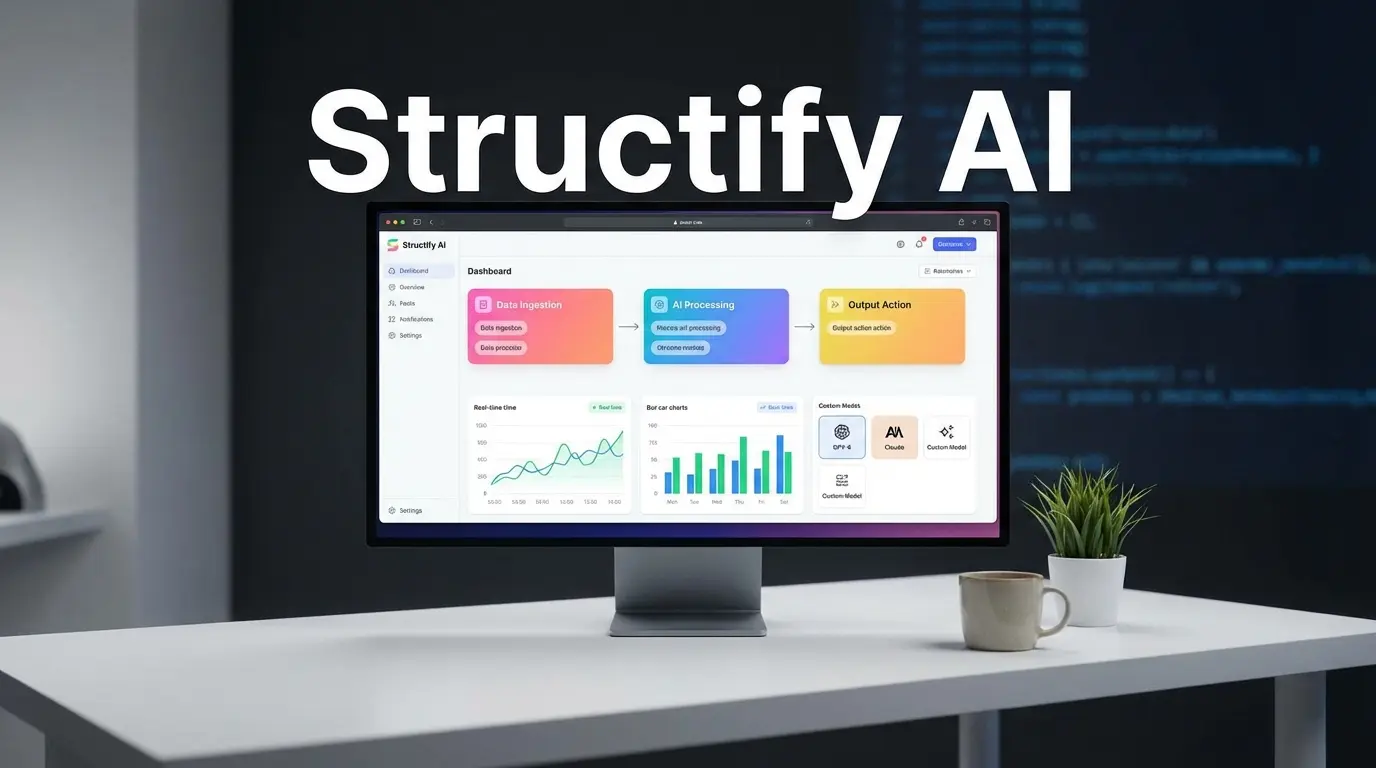
Discover how Structify AI transforms messy, unstructured data into actionable insights through automated extraction, visual mapping, and professional data management tools.
Understanding the Power of Structify AI in Modern Business
We have all been there—staring at a mountain of PDFs, scattered web pages, and endless spreadsheets, trying to find that one piece of information that actually matters. In the past, this usually meant hours of manual copy-pasting or hiring expensive teams to do the grunt work. However, the landscape is shifting. Tools like Structify AI are stepping in to bridge the gap between raw, chaotic information and the structured data that businesses need to actually grow.
Think of it as a bridge. On one side, you have the “mess”—the unstructured world of the internet and internal documents. On the other side, you have your “engine”—your CRM, your databases, and your decision-making meetings. Structify AI acts as the intelligent layer that cleans, sorts, and delivers exactly what you need without the usual headache of manual entry.
I recently spoke with a revenue operations lead who mentioned they were spending nearly fifteen hours a week just verifying lead data. After implementing an AI data specialist workflow, that time dropped to under an hour. That is the kind of practical, real-world impact we are talking about here. It is not just about “using AI”; it is about solving the very human problem of information overload.
The Role of a Structify AI Data Specialist
While the software itself is incredibly powerful, the true magic happens when you understand the role of a data specialist within this ecosystem. This isn’t just someone who clicks “start.” A specialist knows how to architect a data pipeline. They understand which sources are reliable and how to tell the AI agents exactly what to look for.
The core responsibilities typically include:
- Designing custom extraction schemas for specific industry needs.
- Setting up automated “playbooks” that run on a schedule.
- Ensuring the accuracy of the output through verification loops.
- Integrating the cleaned data into existing tools like Salesforce or HubSpot.
Why Businesses are Moving Away from Manual Scraping
Traditional web scraping is brittle. You write a script, the website changes its layout by one pixel, and suddenly your whole system breaks. This is where Structify AI changes the game. Instead of relying on rigid code, it uses agentic AI that “understands” the context of a page. If a button moves from the left to the right, the AI doesn’t care—it still knows it’s the “Download” button.
How Structify AI Simplifies Data Management
The platform operates on a philosophy that context is king. Most AI tools can give you a generic summary, but Structify is designed to understand your specific business logic. If you are in real estate, “location” means something very different than it does in logistics. The tool allows you to build a “Context Handbook” so the AI learns your definitions over time.
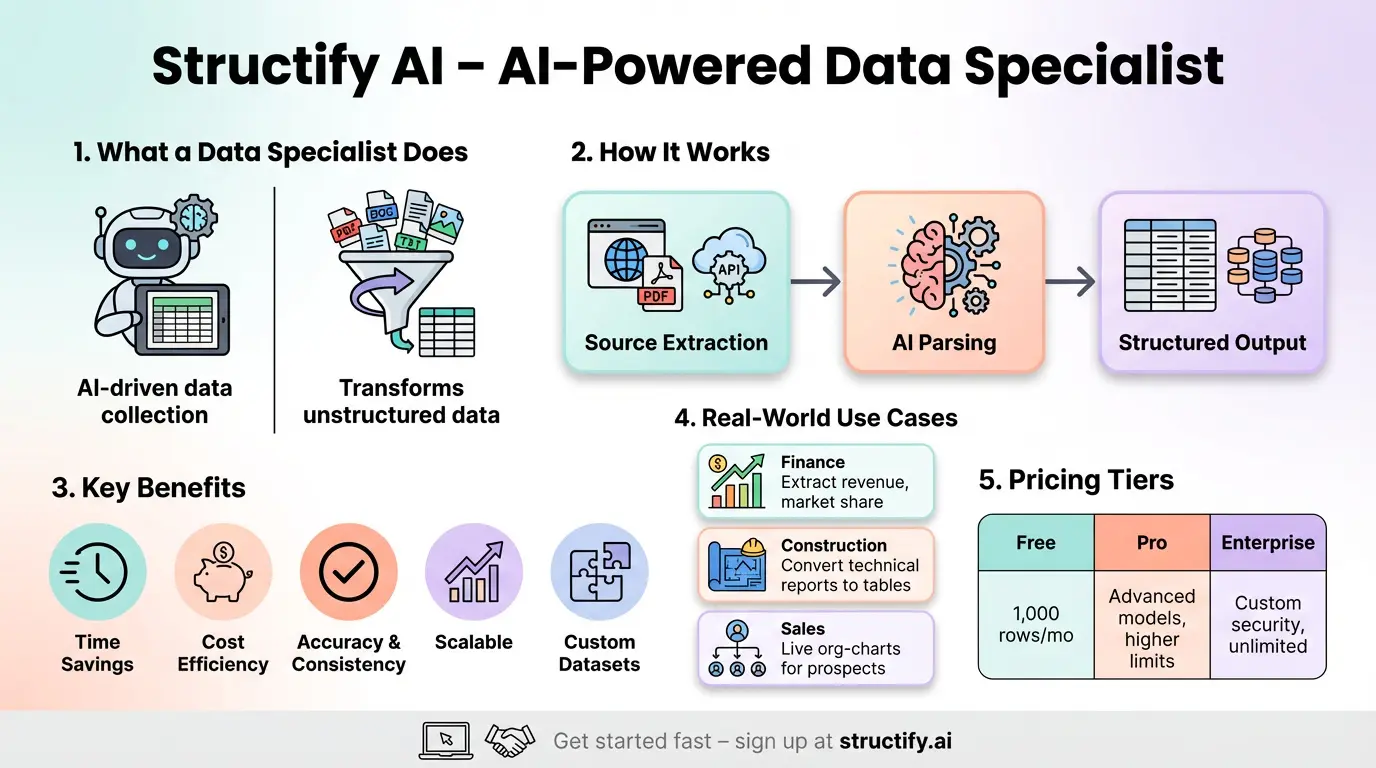
By centralizing this logic, you avoid the “One-Off Report” trap. We’ve all seen those dashboards that look great for one week and then become stale because nobody updated the source data. Structify prevents this by creating living, breathing data maps that evolve with your sources.
Comparing Data Management Strategies
To really see the value, it helps to look at how Structify stacks up against the old ways of doing things. Whether you are a small startup or a large enterprise, the differences in efficiency are stark.
| Feature | Manual Data Entry | Traditional Scraping | Structify AI |
|---|---|---|---|
| Setup Speed | Immediate (but slow execution) | Slow (requires coding) | Fast (prompt-based) |
| Maintenance | High (human error) | Very High (breaks easily) | Low (self-healing AI) |
| Scalability | Poor | Moderate | Excellent |
| Data Quality | Inconsistent | Rigid | High & Context-Aware |
Key Benefits for Revenue and Operations Teams
If you are leading a RevOps or BizOps team, your biggest enemy is friction. Every minute spent cleaning a CSV is a minute not spent on strategy. Here is how an AI data specialist approach helps you win back that time.
- Better Lead Enrichment: Automatically pull the latest news, funding rounds, or hiring changes for your target accounts.
- Market Intelligence: Track competitor pricing or product launches across dozens of sites simultaneously.
- Financial Accuracy: Extract metrics from messy earnings reports or pitch decks without opening a single PDF.
- Reduced Technical Debt: No need to maintain a complex internal scraping infrastructure.
The Concept of Vibe Coding and Data
A fascinating trend mentioned by industry leaders like Alex Reichenbach is “vibe coding.” This is the practice of using LLMs to build features quickly. While it has its risks in core infrastructure, it is perfect for data extraction. You can essentially “vibe” your way to a custom data report by describing what you want in plain English, and the AI handles the heavy lifting of the extraction logic.
Practical Use Cases Across Industries
It is easy to talk about “efficiency” in the abstract, but let’s look at some real-life scenarios where this technology is making a difference right now. These aren’t just theories; these are workflows currently being used by fast-moving teams.
Real Estate and Construction
In the world of construction, project leads often deal with geotechnical reports that are hundreds of pages long. A specialist can use Structify to extract soil types, depth requirements, and environmental risks into a single table. This turns a three-day reading task into a five-minute review.
Venture Capital and Finance
Analysts receive hundreds of pitch decks every month. Using automated playbooks, they can extract “Pre-money valuation,” “Runway,” and “Burn rate” directly into their internal CRM. This allows the team to compare startups side-by-side instantly rather than hunting through slides.
Getting Started with Your Data Strategy
Transitioning to an AI-powered data model doesn’t have to happen overnight. Most successful teams start with a single, high-friction problem. Maybe it’s your monthly competitor audit or your quarterly earnings summary. By automating one high-value task, you prove the ROI and can then scale the “Context Handbook” to the rest of the organization.
For those looking for more technical depth, checking out documentation on VentureBeat’s Structify launch provides great insight into the seed funding and vision behind the company. Additionally, exploring platforms like Crunchbase can show you how structured data is already a massive commodity in the business world.
Best Practices for Structify AI Implementation
To get the most out of the tool, you should treat your AI agents like new employees. You need to give them clear instructions and a bit of “onboarding.”
- Define the Goal: Be specific. Instead of “Get info on companies,” try “Extract the last three years of revenue and current CEO name from these 50 URLs.”
- Build the Context: Use the handbook feature to define acronyms or industry-specific terms.
- Audit Early: Check the first few rows of data to ensure the AI is interpreting the fields correctly.
- Iterate: If the AI misses a piece of info, refine your prompt. It learns from your corrections.
The Future of Structured Data in 2026
As we move further into 2026, the demand for AI data management tools is only going to grow. We are moving away from the era of “search” and into the era of “answers.” You don’t want a list of links; you want a table of facts. Structify AI is at the forefront of this shift, turning the world’s unorganized information into a global database that anyone can query.
It’s a powerful time to be a data-driven leader. The tools are finally catching up to our ambitions, and the “busy work” that once defined a junior analyst’s career is being replaced by high-level architectural thinking. Whether you are a solo founder or a COO at a Fortune 500 company, the goal remains the same: stop drowning in reports and start acting on data.
Frequently Asked Questions (FAQs)
What is a Structify AI Data Specialist?
A specialist who uses the Structify platform to design, automate, and manage data pipelines. They transform messy sources like PDFs and websites into clean, usable formats for business analysis.
How does Structify differ from standard web scrapers?
Standard scrapers use rigid code that breaks when a site changes. Structify uses AI agents that understand context, making them much more resilient to website updates and layout changes.
Can I use Structify AI for free?
Yes, there is a free trial tier that includes 1 seat and $20 in credits. This is perfect for testing the platform and seeing how it handles your specific documents or data sources.
Is my data secure when using AI agents?
Structify offers enterprise-grade security, including SOC 2 Type II compliance and SSO/SAML options. Your data logic is stored in a private context handbook unique to your organization.
What industries benefit most from this tool?
Any data-heavy industry, including Finance, Real Estate, Sales (GTM teams), and Revenue Operations. It is especially useful for teams that manually process large amounts of unstructured text.
Also Read: AI GIS applications: Boost Spatial Insights for Smarter Decisions in 2026