



Ai Integrated Smart Crypto Wallet: Boost Security, Slash Gas Fees
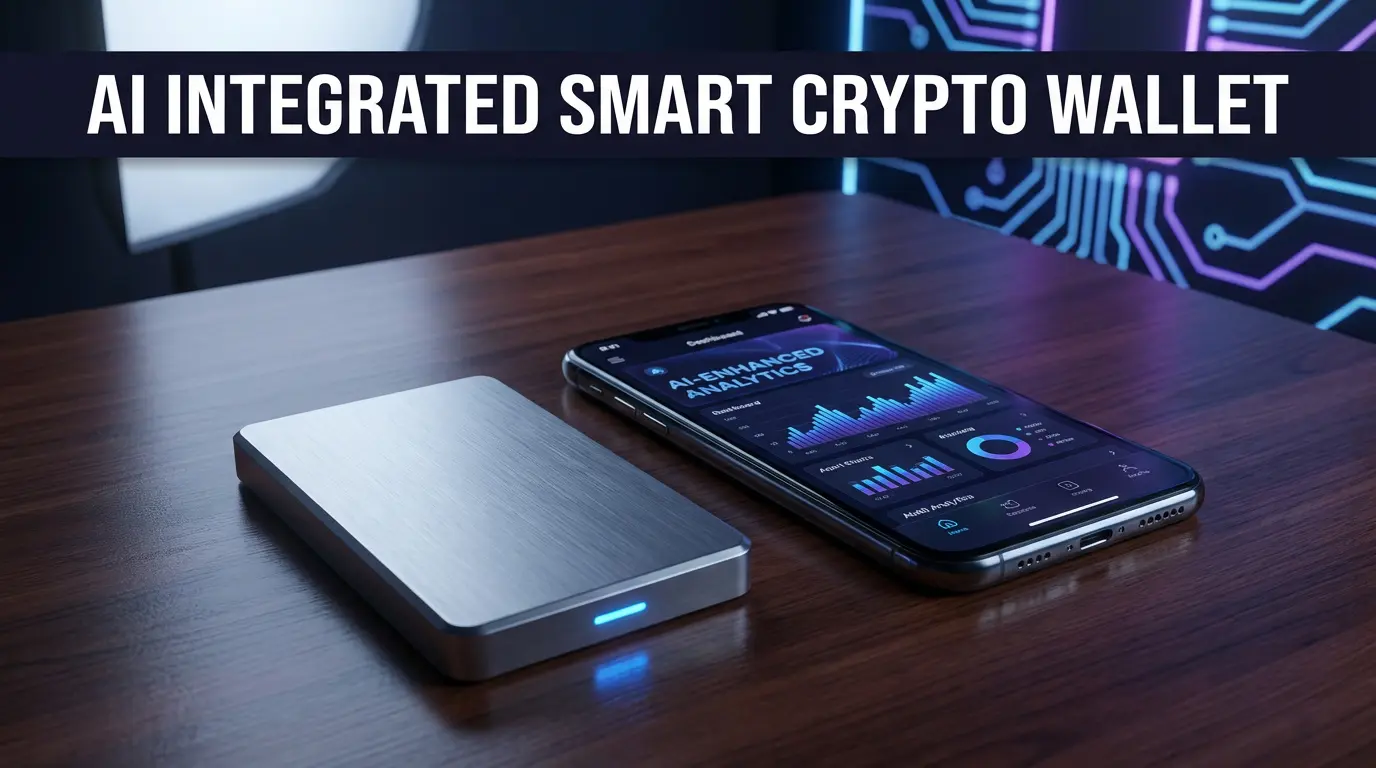
Discover how an AI integrated smart crypto wallet is transforming digital asset management by enhancing security, automating complex transactions, and providing real-time market insights for a safer, smarter experience.
The New Era of Digital Asset Management
If you have been in the crypto space for more than a week, you know the drill: double-checking long strings of characters, sweating over gas fees, and staying up until 3 AM to make sure a trade hits. For years, managing a portfolio felt like a full-time job that required a degree in cybersecurity and the nerves of a high-stakes gambler. But the landscape is shifting. We are moving away from passive storage toward a more proactive, “thinking” ecosystem.
Enter the AI integrated smart crypto wallet. This isn’t just another buzzword or a fancy skin on an old app. It represents a fundamental change in how we interact with the blockchain. Imagine a wallet that doesn’t just sit there holding your Bitcoin, but actually whispers, “Hey, network fees are at a three-month low right now, maybe move those funds now?” or “That contract you’re about to sign looks a lot like a known phishing scam.” That is the reality of artificial intelligence meeting decentralized finance.
As the crypto market becomes more complex and intertwined with traditional finance, the tools we use must keep up. According to industry data, the Fintech AI market is projected to reach nearly $40 billion by 2030. This growth is driven by a simple human need: the desire for technology that works for us, rather than the other way around. Whether you are a seasoned “HODLer” or a newcomer buying your first fraction of ETH, understanding these smart wallets is the key to navigating the next decade of finance.
What Exactly Is an AI Integrated Smart Crypto Wallet?
At its core, an AI integrated smart crypto wallet is a digital storage solution that uses machine learning (ML) and predictive algorithms to manage digital assets. Unlike a traditional “dumb” wallet, which only acts as an interface to sign transactions, a smart wallet acts as a personal financial assistant. It learns your habits, monitors the global market 24/7, and provides layers of protection that human eyes simply cannot match.
Think of it as the difference between a standard safe and a high-tech vault with a built-in security team and a financial consultant. These wallets leverage artificial intelligence crypto storage capabilities to bridge the gap between technical blockchain hurdles and the everyday user. By analyzing vast amounts of on-chain data in milliseconds, they can identify trends and risks that would take a human hours to research.
The “Smart” Component
The term “Smart Wallet” usually refers to wallets built on smart contracts (like Account Abstraction on Ethereum). When you add AI to that mix, you get a tool that can execute “if-this-then-that” scenarios with actual intelligence. For example, it can automatically move your stablecoins to a higher-yielding protocol if it detects a shift in APY, all while ensuring the gas cost doesn’t eat your profits.
How Artificial Intelligence Transforms Your Wallet
The integration of AI isn’t just for show; it changes the mechanics of how transactions occur. Traditional wallets are reactive—you tell them to do something, and they do it. AI wallets are proactive. They look at the current state of the mempool, the history of the address you are sending to, and the volatility of the asset you are trading.
One of the most practical examples is transaction optimization. If you’ve ever paid $50 in gas for a $20 swap, you know the pain. AI algorithms monitor network congestion in real-time. They can suggest the exact gwei to set so your transaction doesn’t get stuck for hours, or they can even schedule the transaction for a time when the network is historically quiet. It is about smart wallet cryptocurrency management that saves you money without you having to be an expert.
Key Features of AI-Powered Wallets
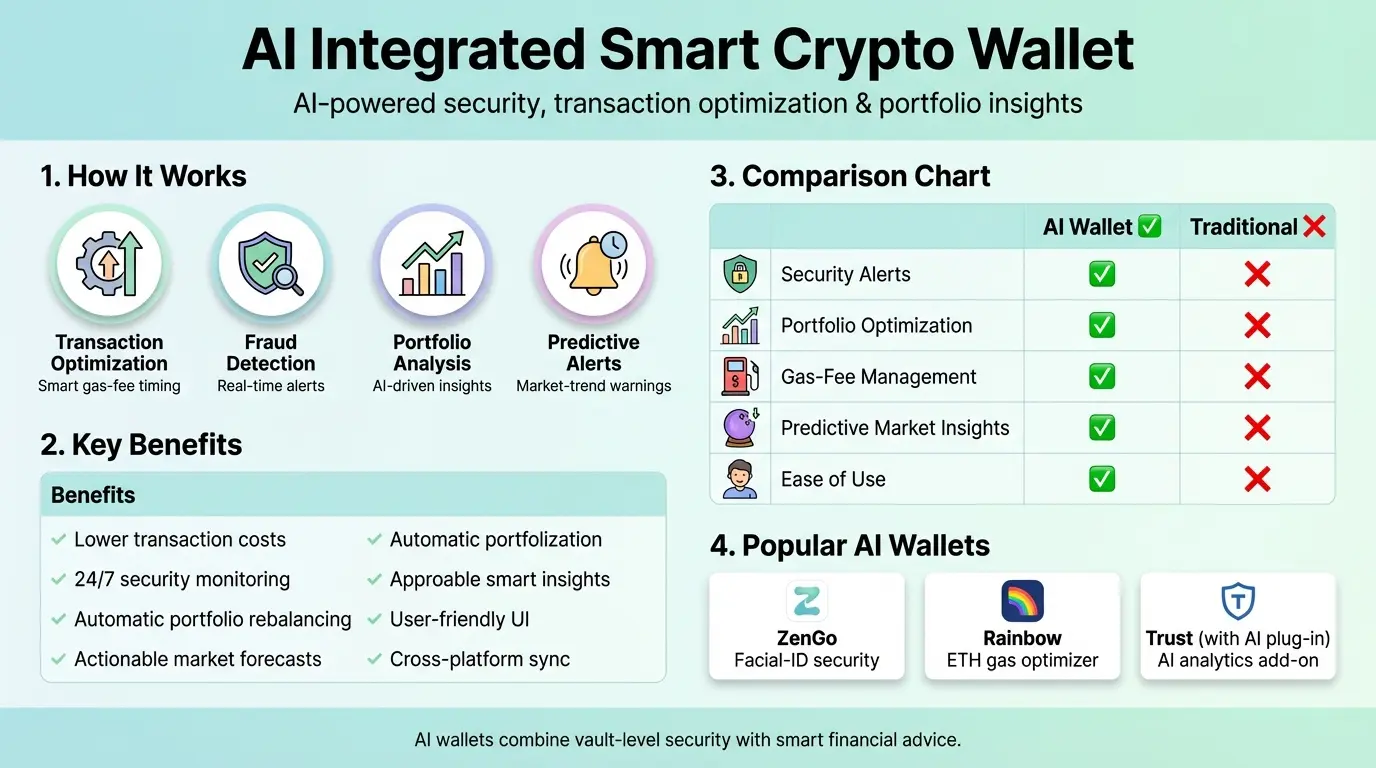
When you start using an AI integrated smart crypto wallet, you’ll notice several features that distinguish it from the older generation of apps. These aren’t just minor tweaks; they are structural upgrades to the user experience.
- Real-time Fraud Detection: The AI scans every smart contract interaction for “red flag” patterns, such as hidden rug-pull functions or malicious permissions.
- Predictive Analytics: It provides insights into where the market might be heading based on social sentiment and whale movements.
- Automated Portfolio Rebalancing: It can maintain your desired asset allocation (e.g., 60% BTC, 40% ETH) by executing small trades when the ratio drifts.
- Natural Language Processing (NLP): Some advanced wallets allow you to “talk” to your wallet. You can type “Send $100 worth of SOL to Neelesh” instead of copying and pasting long hex codes.
- Gas Fee Prediction: Using historical data to forecast the cheapest windows for transactions on congested networks like Ethereum.
Why Security Is the Biggest Winner
The number one fear for any crypto user is losing their funds to a hack or a mistake. Traditional security relies on you keeping a piece of paper (your seed phrase) safe. If a hacker gets your keys, it’s over. AI changes the game by focusing on behavioral biometrics and anomaly detection. If someone accesses your wallet from a new IP address and tries to drain your most valuable NFTs, the AI can flag this as an anomaly and trigger a temporary lock or require secondary biometric verification.
This is a massive leap for ai crypto wallet features. Instead of just protecting the “front door” with a password, the AI is a security guard walking the halls of your digital house. It recognizes that “you” usually trade small amounts on DEXs, so a sudden attempt to send your entire balance to a high-risk mixer will trigger an immediate alert. This proactive stance is exactly what the industry needs to reach mass adoption.
Comparison: Traditional vs. AI-Smart Wallets
| Feature | Traditional Wallet | AI Integrated Smart Wallet |
|---|---|---|
| Security | Static (Keys/Passwords) | Dynamic (Behavioral/Anomaly Detection) |
| Transaction Fees | Manual Selection | AI-Optimized Timing & Pricing |
| User Support | Documentation/Forums | AI Chatbots & Live Guidance |
| Portfolio Tracking | Basic Price Updates | Deep Insights & Market Predictions |
| Ease of Use | High Learning Curve | Intuitive/Conversational Interface |
Managing Your Portfolio with Machine Learning
Beyond security, these wallets serve as a mini-hedge fund in your pocket. Deep learning models can track thousands of tokens across multiple chains simultaneously. For an average human, keeping track of the “Alpha” in DeFi, NFTs, and Layer 2s is impossible. For an AI, it’s just another Tuesday.
By using an ai integrated smart crypto wallet, you get access to “sentiment analysis.” The AI can crawl news feeds and social media to gauge if the hype around a new coin is organic or a coordinated pump-and-dump. This doesn’t mean the AI makes the decisions for you—you are still the pilot—but it gives you a much better “radar” system to navigate the stormy seas of crypto volatility.
The Technical Challenges We Still Face
It’s not all sunshine and rainbows yet. Building an AI that can interact with the blockchain is incredibly difficult. Blockchains are, by design, closed systems. Getting an AI model to “talk” to a decentralized ledger requires a massive amount of computational power and sophisticated middleware. There is also the issue of “model poisoning,” where bad actors might try to feed the AI false data to manipulate its recommendations.
Furthermore, privacy is a major concern. If your wallet is learning your habits to protect you, where is that data stored? The best AI wallets use “Edge AI,” meaning the learning happens locally on your device rather than on a central server. This keeps your financial data private while still giving you the benefits of artificial intelligence crypto storage. It is a delicate balance that developers are still perfecting.
Popular AI Integrated Wallets to Watch in 2026
Several projects are leading the charge. While some are brand new, others are established giants that have “pivoted” into AI. If you’re looking to upgrade your setup, these names are worth a look:
- MetaMask (with AI Snaps): The industry leader has integrated third-party AI modules that can simulate transactions before you sign them.
- Zengo: Known for its MPC (Multi-Party Computation) technology, it uses AI for facial recognition and threat detection to eliminate the need for a seed phrase.
- RabbitHole / Armor Wallet: These focus heavily on the “Assistant” aspect, helping you find yield opportunities while keeping you safe from malicious dApps.
- ASI Wallet: Specifically built for the Fetch.ai ecosystem, it is designed for a world where AI agents trade with other AI agents autonomously.
For more details on how these technologies are evaluated, you can check out CoinDesk’s technical reviews of emerging wallet tech.
How to Choose the Right Wallet for Your Needs
Don’t just jump into the first AI wallet you see on an Instagram ad. When it comes to your money, you need to be clinical. First, check if the wallet is non-custodial. This means you, and only you, have control over your funds. Even with AI features, you should never give up your “private keys” to a third party.
Secondly, look at the integration list. Does it support the chains you actually use? An AI wallet that only supports Ethereum isn’t very useful if your portfolio is mostly on Solana or Avalanche. Finally, consider the community. Open-source projects are generally safer because the code can be audited by independent developers to ensure there are no “backdoors” hidden in the AI’s logic.
The Future: AI Agents and Autonomous Trading
We are quickly approaching a future where you won’t just “check” your wallet; you will give it “missions.” You might say, “Here is $500, keep it in stablecoins but if the price of Bitcoin drops below $60k, buy the dip and then stake it for at least 5% yield.” The ai integrated smart crypto wallet will then go out into the Web3 world, find the best path, and execute the plan while you sleep.
This level of automation will eventually make “traditional” banking look like sending a telegram in a world of instant messaging. As we move closer to 2027, the line between a crypto wallet and a sophisticated financial OS will disappear entirely. You can read more about the broader impact of AI in fintech on the Mordor Intelligence market reports.
Common Mistakes to Avoid with AI Wallets
Even with the smartest tech, human error is the biggest risk. Don’t become over-reliant on the AI. It is a tool, not a crystal ball. If the AI suggests a trade, you should still do a quick “sanity check.” Also, beware of “AI-Wash” scams—companies that put “AI” in their name but offer no actual intelligence. Always look for a clear explanation of how their smart wallet cryptocurrency logic actually works under the hood.
Lastly, never share your recovery phrase with an “AI Chatbot.” Real AI wallets will never ask for your seed phrase. If a bot claims it needs your 12 words to “calibrate the AI,” it is a scam. Hang up, block, and move on. Keeping your head on a swivel is still the best security feature you have.
Conclusion
The ai integrated smart crypto wallet is more than just a convenience; it is a necessary evolution for a digital world that is moving too fast for humans to manage alone. By combining the trustless nature of blockchain with the analytical power of artificial intelligence, we are finally getting tools that are as smart as the assets they hold. Whether you are looking for enhanced security, lower fees, or just a more user-friendly experience, the shift to AI-powered storage is a move you won’t regret.
As we look toward the future of Web3, the goal is simple: make crypto as easy to use as a banking app, but as secure as a private vault. With AI, we are finally getting there.
Frequently Asked Questions (FAQs)
Is an AI integrated smart crypto wallet safer than a hardware wallet?
They serve different purposes. A hardware wallet (like Ledger) is great for “cold” long-term storage. An AI wallet is superior for “hot” daily use because it can detect active threats and phishing attempts in real-time that a hardware wallet might simply sign without question.
Do these wallets charge extra fees for AI features?
It depends on the provider. Many offer basic AI security for free to attract users, while advanced “pro” features like automated trading or deep portfolio analytics might require a monthly subscription or a small percentage of the gas savings they generate for you.
Can the AI lose my money by making bad trades?
Most AI wallets are designed as assistants, not autonomous traders. They provide “suggestions” that you must approve. If you enable “auto-trading” features, there is always a market risk, as AI can predict trends but cannot account for “Black Swan” events in the global economy.
Do I need to be a technical expert to use a smart wallet?
Actually, it’s the opposite. AI wallets are designed to hide the technical “bloat” of the blockchain. Features like natural language processing and automated gas management make it much easier for non-technical users to manage their crypto safely.
Will an AI wallet work on all blockchains?
Currently, most AI wallets focus on EVM-compatible chains (like Ethereum, Polygon, and BNB Chain) or specific high-traffic networks like Solana. However, the trend is moving toward “chain-agnostic” AI that can manage your assets across the entire Web3 ecosystem from one screen.
Also Read: AI GIS applications: Boost Spatial Insights for Smarter Decisions in 2026