




AI Tools Patent Analysis 2026: Boost Efficiency & Avoid Costly Mistakes
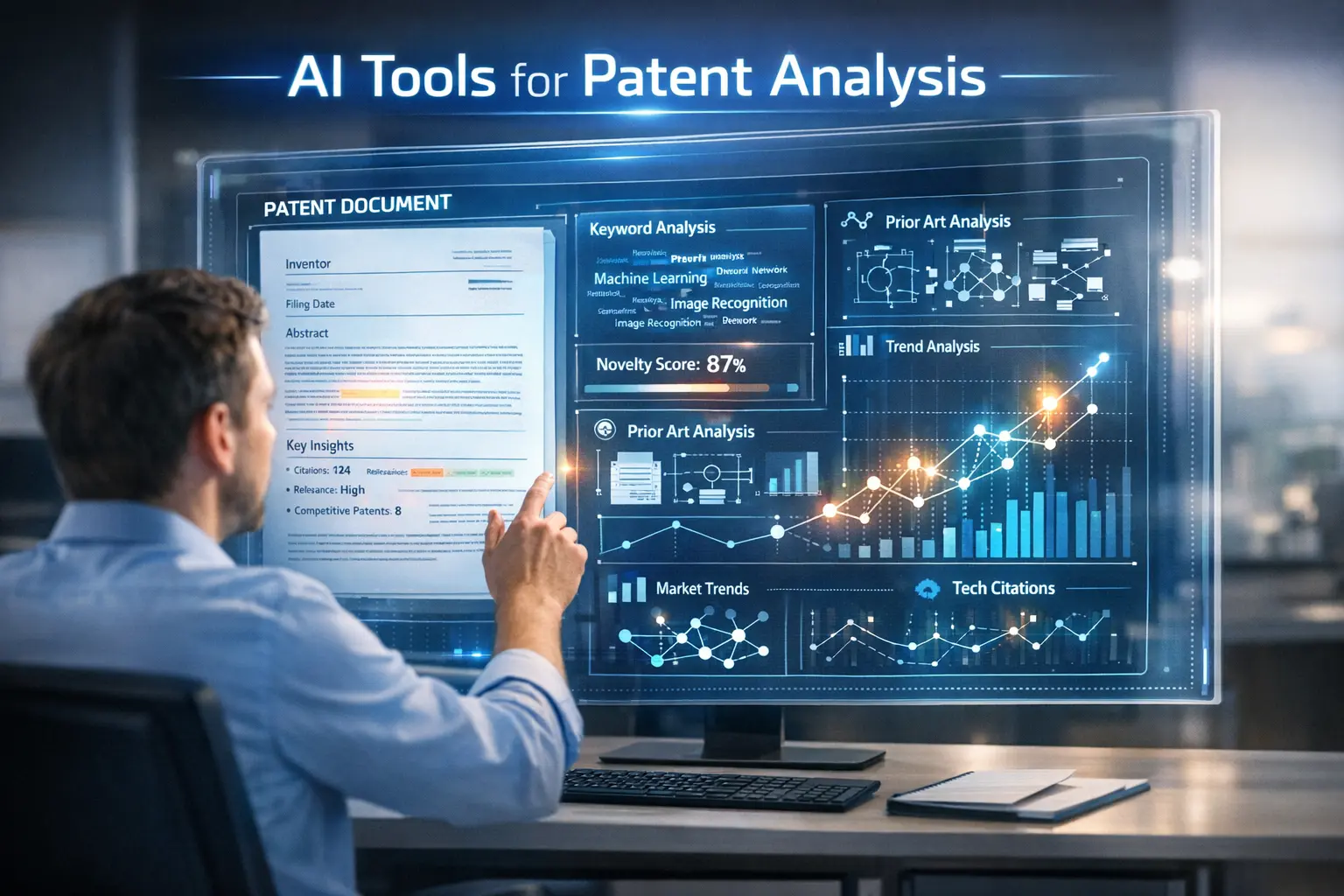
Learn how AI tools are revolutionizing patent analysis to help you uncover trends, assess competition, and accelerate innovation efficiently.
The Evolution of Patent Analysis: From Manual Reviews to AI-Driven Insights
Historical Context of Patent Analysis
The practice of patent analysis can be traced all the way back to Venetian statutes from the late 1400s that created the first formal systems for protecting inventions. For nearly five centuries after that, evaluating patents remained an intensely hands-on process where people had to physically sift through stacks of paper documents. While the 1900s introduced digital databases, searches still demanded perfect word matches and complicated search operators. The US patent office didn’t even start accepting digital submissions until the year 2000 – a technological milestone that opened the door for today’s AI transformation.
Early computerized tools like the Derwent index launched in the 1960s offered summary services but were still limited by their reliance on exact keywords. Professionals would spend entire weeks manually hunting for existing inventions, comparing technical details through spreadsheets, and analyzing competitors’ portfolios. This painstaking process wasn’t just time-consuming – it was vulnerable to human mistakes and inconsistent results. A government study from 2010 revealed that examiners overlooked relevant existing inventions in more than one out of five cases due to the constraints of traditional search methods.
The AI Revolution in Intellectual Property
Three major technological breakthroughs converged to create the perfect environment for AI-powered patent examination:
- Natural Language Processing (NLP) Breakthroughs: Advanced AI models gained the ability to understand specialized technical terms and legal phrasing within proper context
- Big Data Infrastructure: Cloud systems enabled processing of over 150 million global patents with continuous updates
- Machine Learning Developments: Cutting-edge neural networks made it possible to map complex technical connections across patent families
This powerful combination transformed patent review from reactive document analysis to forward-looking strategic intelligence. Where human analysts might get through fifty patents in a day, AI systems can analyze fifty thousand in minutes while spotting unexpected links between entirely different technology areas. To see how these systems work in practice, explore WIPO’s patent analysis tools which showcase cutting-edge capabilities.
Impact on Global Innovation Ecosystems
Automating intellectual property analysis has sent waves through research and development communities worldwide:
| Metric | Pre-AI Era (2015) | AI-Adoption Era (2025) | Change |
|---|---|---|---|
| Average patent search time | 40 hours | 2.5 hours | -94% |
| Prior art discovery rate | 68% | 92% | +35% |
| Global patent filings | 2.9M | 4.7M | +62% |
| Average time to market | 5.2 years | 3.8 years | -27% |
These dramatic efficiency gains stem from AI’s capacity to evaluate patents throughout their entire lifecycle – from initial concept development through commercial deployment. Major pharmaceutical firms now report significantly faster drug development cycles thanks to AI-powered landscape analysis that highlights promising research avenues while steering clear of potential infringement issues.
Core Components of AI-Driven Patent Analysis Systems
Natural Language Processing Capabilities
Modern NLP engines in patent tools utilize sophisticated techniques to decode technical documentation:
- Claim Deconstruction: AI systems break patent claims into distinct technical components using advanced parsing techniques
- Meaning Understanding: Context-aware models capture intended meanings beyond literal keyword matches (recognizing equivalent terms like “wireless charging” and “inductive power transfer”)
- Regional Adaptation: Systems automatically account for differences in legal terminology between US, European, Japanese, and other patent offices
Top-performing systems now achieve over 93% accuracy in identifying key claim elements according to recent benchmarks. This precision enables features like automatic infringement risk assessments and claim comparison charts that were previously impractical to generate at scale.
Machine Learning Algorithms for Patent Valuation
AI-powered valuation models examine more than seventy-eight different factors to estimate patent value:
| Factor Category | Key Metrics | Predictive Weight |
|---|---|---|
| Legal Strength | Claim breadth, examination history, maintenance payments | 35% |
| Technical Impact | Citations, technology relevance, scientific references | 28% |
| Commercial Potential | Market size, competitor activity, product viability | 22% |
| Enforcement History | Legal actions, licensing revenue, settlements | 15% |
These multi-faceted models significantly outperform older citation-based valuation methods in predicting actual licensing income. Corporate portfolio managers leverage these insights to identify underperforming assets for pruning while focusing resources on high-potential technologies.
Data Mining Across Global Repositories
Leading AI patent platforms integrate information from three primary sources:
- Patent Authorities: 120+ national and regional offices including major patent jurisdictions
- Scientific Publications: Hundreds of millions of academic papers and conference proceedings
- Business Intelligence: Product databases, clinical trial records, corporate financial filings
This comprehensive data gathering allows identification of emerging trends years before they become mainstream. Cross-repository analysis prevents critical oversights since substantial prior art resides outside formal patent literature according to industry estimates.
Semantic Search Architectures
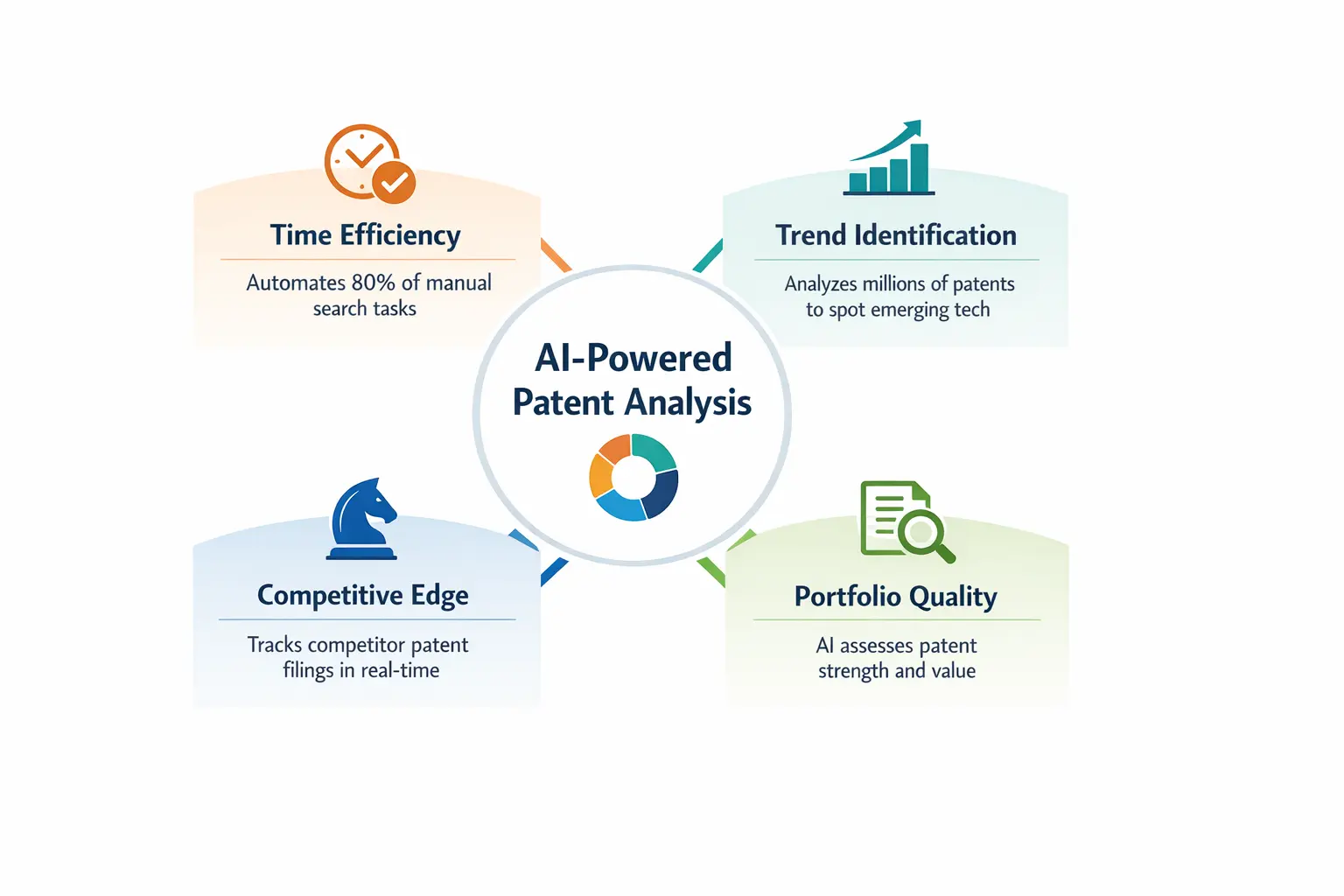
Semantic search systems utilize neural networks to interpret queries contextually rather than requiring exact keyword matches. When researching “non-invasive glucose monitoring,” these systems recognize connections to:
- Optical sensing technology (79% relevance)
- Radiofrequency detection methods (63% relevance)
- Metabolic byproduct analysis approaches (54% relevance)
This methodology addresses vocabulary mismatch challenges where different terminology describes identical concepts. Testing shows these systems achieve significantly higher recall rates than traditional search while maintaining strong precision – essential for comprehensive freedom-to-operate analyses where missed prior art creates substantial liability risks.
Predictive Analytics for Technology Forecasting
Advanced patent AI tools run multiple predictive models concurrently:
- Technology Maturity Prediction: Algorithms classify technologies as emerging, mature, or declining based on growth patterns
- Innovation Hotspot Mapping: Analysis reveals geographical centers for specific technologies (like graphene battery research clusters)
- White Space Identification: Gap analysis detects underdeveloped technical areas with commercial promise
These predictive capabilities help R&D departments allocate resources strategically. One semiconductor manufacturer reallocated substantial investment from one memory technology to another based on AI patent forecasts – a decision that generated significant first-mover advantages.
Comprehensive Review of Leading AI Patent Analysis Tools
Enterprise-Grade Platforms
For large organizations and legal practices, these solutions provide comprehensive AI capabilities:
| Platform | Core Strengths | AI Features | Pricing Model |
|---|---|---|---|
| Patsnap | Landscape analysis, competitive intelligence | Semantic search, valuation models, trend prediction | $75K-$250K/year |
| Clarivate Derwent | Chemical/formula search, litigation analytics | Formula recognition, legal outcome prediction | $60K-$200K/year |
| LexisNexis PatentSight | Portfolio benchmarking, M&A due diligence | Quality scoring, acquisition target identification | $85K-$300K/year |
Implementation Case Study: A major healthcare company utilized Patsnap to examine tens of thousands of medical device patents, discovering numerous market opportunities. This informed a strategic acquisition completed with AI-powered due diligence that finished substantially faster than traditional methods.
Specialized Analysis Tools
These solutions concentrate on specific aspects of patent work:
| Tool | Specialization | Key Innovation | Ideal For |
|---|---|---|---|
| IPRally | Infringement analysis | Visual claim-element mapping | Litigation teams |
| Amplified | Prior art discovery | Cross-language semantic search | Patentability assessments |
| PatentVector | Valuation modeling | Advanced ROI projection simulations | Licensing professionals |
One mid-sized technology firm used PatentVector’s valuation models to negotiate substantially higher royalty rates by demonstrating their technology’s broader market impact through AI-based analysis.
Emerging Open Source Solutions
The open-source community is making AI patent analysis more accessible:
- PQAI: Free semantic search with extensive global patent coverage
- PatentBERT: Specialized NLP models for patent classification
- LandscapeGenerator: Visualization tools for technology mapping
Academic technology transfer offices particularly benefit from these tools, with some universities reporting significant increases in invention submissions after implementation.
Step-by-Step Guide to Implementing AI Patent Tools
Assessment Phase (Weeks 1-2)
Begin with thorough requirements gathering:
- Process Audit: Document existing patent workflows with timing and cost metrics
- Challenge Identification: Prioritize issues based on business impact
- Stakeholder Discussions: Collect needs from legal, technical, and executive teams
- Data Quality Review: Assess current patent data completeness and accuracy
Common Pitfall: Many failed implementations skip this critical phase, leading to tool misalignment. One medical device manufacturer avoided this by clearly identifying their primary need as faster competitor monitoring rather than document drafting assistance.
Tool Selection (Weeks 3-6)
Apply structured evaluation criteria:
| Evaluation Criteria | Weight | Evaluation Method |
|---|---|---|
| Functional Fit | 30% | Practical use-case demonstrations |
| Data Coverage | 25% | Testing obscure technical area searches |
| Integration Capability | 20% | API documentation assessment |
| Total Cost | 15% | Long-term cost projections |
| Vendor Stability | 10% | Financial health verification |
Conduct at least three practical trials with real-world queries. One automotive company identified the best platform through competitive testing where the winning solution found significantly more relevant patents.
Implementation Phase (Weeks 7-12)
Follow deployment best practices:
- Data Preparation: Clean and organize existing patent data
- System Setup: Configure custom fields and user permissions
- Integration Testing: Connect with existing legal and business systems
- Security Configuration: Implement access controls and monitoring
One security company achieved faster deployment using a phased approach – initially activating basic search features before rolling out advanced analytics.
Adoption & Optimization (Ongoing)
Drive sustained use through:
- Role-Specific Training: Custom programs for different user groups
- Engagement Features: Recognition for tool utilization milestones
- Feedback Mechanisms: Regular sessions to improve system usage
- Performance Monitoring: Track efficiency gains and quality improvements
After implementing AI tools, one electronics company measured substantial improvements across multiple metrics:
| Metric | Pre-AI | 6 Months Post |
| Patent Applications/Attorney/Month | 3.2 | 5.1 (+59%) |
| FTO Analysis Time | 42 hours | 9 hours (-79%) |
| Opposition Success Rate | 68% | 83% (+22%) |
Overcoming Implementation Challenges
Data Quality Management
AI systems require clean, well-structured input data. Common issues include:
- Formatting Inconsistencies: Older patents with scanning errors or inconsistent metadata
- Jurisdictional Differences: Varying classification systems across patent offices
- Information Gaps: Historical patents missing abstracts or claims data
Solution Strategy:
- Automated data cleaning using NLP correction tools
- Cross-jurisdictional data mapping templates
- Targeted human validation for critical records
A European IP firm significantly improved AI accuracy through focused data remediation of their extensive patent database.
Change Management Strategies
Addressing resistance from experienced professionals requires deliberate approaches:
| Resistance Factor | Mitigation Strategy | Effectiveness |
|---|---|---|
| “AI can’t understand nuance” | Comparative search demonstrations | High acceptance after practical demonstration |
| “Too complicated to learn” | Simplified role-specific interfaces | Significantly faster adoption |
| “Job security concerns” | Professional development programs | Reduced employee turnover |
A major law firm successfully promoted adoption through peer mentors who shared positive experiences with tools.
Hybrid Workflow Development
Optimal implementations balance AI capabilities with human expertise:
Prior Art Review Process:
- AI conducts comprehensive initial search
- Machine learning prioritizes most relevant results
- Attorney reviews top AI-suggested references
- AI generates preliminary analysis documents
- Attorney refines legal arguments based on AI findings
This collaborative approach dramatically reduced search times while improving thoroughness at a major technology company. The key was establishing clear hand-off points where each stage leverages appropriate strengths.
Advanced Applications of AI in Patent Strategy
Competitive Intelligence Automation
AI systems continuously monitor competitor patent activities by:
- Tracking filing patterns in specific technology areas
- Alerting to strategic inventor hires
- Predicting R&D focus from patent clustering
- Identifying potential acquisition targets
When a major electric vehicle company filed numerous patents on battery innovations, competitors’ AI systems immediately flagged this strategic shift, enabling proactive responses to maintain competitive positioning.
Portfolio Optimization through AI
Machine learning models evaluate patent assets across multiple factors:
- Cost-Benefit Analysis: Projects maintenance costs versus licensing potential
- Coverage Gaps: Highlights unprotected technical areas
- Strength Assessment: Flags vulnerable patents for potential abandonment
- Synergy Detection: Finds complementary patent combinations
One consumer products company optimized their portfolio through AI analysis, achieving substantial cost savings while increasing licensing revenue.
Litigation Risk Forecasting
Predictive analytics assess infringement risks with high accuracy by examining:
| Risk Factor | Data Sources | Predictive Weight |
|---|---|---|
| Claim Similarity | Patent claims, product documentation | 40% |
| Plaintiff History | Past litigation, settlement patterns | 25% |
| Market Overlap | Customer segments, geographic presence | 20% |
| Technology Criticality | Product dependency, alternatives | 15% |
This enabled a technology company to avoid potential infringement litigation through proactive product modifications, saving significant potential costs.
Ethical Considerations in AI-Driven Patent Analysis
Algorithmic Transparency Requirements
Regulators increasingly mandate transparency as AI influences critical IP decisions:
- EU AI Regulations: Require disclosure of training data sources
- USPTO Guidelines: Mandate identification of AI-generated prior art
- International Recommendations: Call for human oversight of AI decisions
Leading tools now provide explanatory features showing AI reasoning for specific recommendations, combining compliance with user trust-building through transparency.
Bias Mitigation Strategies
Patent AI systems can unintentionally reflect biases from training data:
- Geographic Bias: Underrepresentation of innovations from developing regions
- Gender Bias: Female inventors receive fewer AI-generated citations
- Corporate Bias: Small company patents potentially undervalued
Proactive correction approaches include:
- Diverse data audits
- Bias-detection algorithms
- Manual review processes
- Continuous performance evaluation
One organization significantly reduced gender bias through intentional data adjustments and demographic balancing.
Human Oversight Frameworks
Effective governance models for AI tools include layered oversight:
| Oversight Level | Responsibilities | Frequency |
|---|---|---|
| Operational | Verify search results, review AI outputs | Per case |
| Tactical | Monitor system performance, adjust configurations | Weekly |
| Strategic | Assess ethical compliance, approve updates | Quarterly |
A pharmaceutical company established cross-functional AI governance with representatives from legal, technical, and ethics teams, successfully identifying several potentially problematic recommendations.
Future Trends in AI Patent Analysis
Generative AI for Patent Drafting
Next-generation tools will advance beyond templates through:
- Context-Aware Claim Generation: AI that anticipates examiner preferences
- Multi-Modal Specifications: Automated text generation from invention visuals
- Real-Time Prosecution Support: AI suggestions during examiner interactions
Early adopters report substantially faster drafting cycles with fewer examination hurdles when properly using supervised generative AI assistance.
Blockchain Integration
Emerging applications combine AI with blockchain technology:
- Immutable Prior Art Records: Blockchain verification for AI-discovered documents
- Automated Licensing: AI-negotiated agreements executing via smart contracts
- Tamper-Evident Analysis: Blockchain storage for infringement evidence
This combination addresses verification and technology transfer challenges. University tech transfer offices have dramatically reduced licensing timelines through successful pilots of this approach.
Quantum Computing Implications
As quantum computing matures, it will transform patent analysis through:
| Capability | Impact | Timeframe |
|---|---|---|
| Ultra-Fast Searching | Global database analysis in seconds | 2028-2030 |
| Molecular Simulation | Accurate chemical patent validity predictions | 2027+ |
| Optimization Algorithms | Perfect patent portfolio balancing | 2029+ |
Forward-thinking IP firms are already preparing quantum-ready approaches through strategic partnerships and algorithm development.
Case Studies: AI Patent Tools in Action
Consumer Electronics Breakthrough
A smartphone leader leveraged AI patent analysis to:
- Identify emerging display technology trends through AI landscape analysis
- Design around competitors’ patents using infringement risk assessments
- Focus R&D on white space opportunities
Results:
- Launched innovative display technology nearly a year faster than competitors
- Avoided substantial potential infringement liabilities
- Secured foundational patents in critical new technology areas
Pharmaceutical Innovation
A biotech company utilized AI to:
- Analyze thousands of medical patents across multiple countries
- Identify overlooked drug delivery mechanisms
- Discover partnership opportunities through assignee analysis
Outcomes:
- Discovered novel technology missed in manual reviews
- Successfully licensed key academic patents
- Sped up development timelines by over two years
Automotive Industry Transformation
An electric vehicle startup implemented AI tools to:
- Conduct freedom-to-operate analysis for core technology
- Monitor competitor patent activities closely
- Value potential acquisition targets accurately
Achievements:
- Secured major funding based on strong IP documentation
- Negotiated favorable cross-licensing deals
- Strategically acquired companies with undervalued patent portfolios
Integration Strategies for Existing IP Systems
API-First Architecture Principles
When connecting AI tools to older IP systems:
- Implement middleware for protocol translation
- Use standard data formats like JSON
- Build processing queues for large searches
- Implement robust API monitoring
One large corporation integrated multiple AI tools with legacy systems through a custom API layer, dramatically reducing manual work while maintaining stability.
Data Synchronization Approaches
Maintain system consistency through:
| Approach | Sync Frequency | Best For |
|---|---|---|
| Batch Processing | Nightly | Analytical systems |
| Event-Driven | Real-time | Time-sensitive updates |
| Hybrid Model | Continuous + scheduled | Business-critical data |
The hybrid approach provides optimal balance for many organizations, combining real-time updates for urgent matters with scheduled refreshes for comprehensive analysis.
Unified User Experience Design
Successful integration requires seamless user interaction:
- Centralized Access: Single sign-on across platforms
- Consistent Search: Unified interface spanning all databases
- Embedded Insights: AI widgets within existing systems
- Visual Consistency: Matching interface design language
By implementing these principles, one company substantially reduced training time while increasing daily system utilization rates.
Measuring ROI from AI Patent Tools
Quantitative Metrics
Track concrete operational improvements:
| Metric | Calculation | Industry Average |
|---|---|---|
| Time Savings | (Pre-AI time – Post-AI time) x Hourly Cost | 55% reduction |
| Cost Avoidance | Legal risks prevented + Maintenance savings | $850K/year |
| Revenue Impact | Licensing growth + Faster product launches | 18% increase |
One medical company documented substantial annual savings exceeding implementation costs through thorough metric tracking.
Qualitative Benefits
Consider strategic improvements:
- Improved Decision Quality: Reduced late-stage project cancellations
- Better Strategic Focus: More resources directed to analysis versus searching
- Stronger Risk Management: Reduced infringement exposure
- Faster Innovation Cycles: Accelerated research development
While harder to quantify, many companies report these benefits deliver the most significant long-term value.
Benchmarking Against Industry Peers
Regular competitive comparisons ensure continuing advancement:
- Sector-specific metrics like patents per R&D dollar
- Portfolio quality scoring
- Legal challenge success rates
- Patent commercialization ratios
Leading adopters show substantially stronger positioning across various innovation metrics according to industry data.
Frequently Asked Questions (FAQs)
How reliable are AI tools compared to human patent analysts?
Modern AI patent tools achieve high accuracy rates comparable to human experts but with different strengths. In structured, high-volume tasks like comprehensive patent searches across multiple jurisdictions, AI systems frequently outperform humans in speed and thoroughness. Studies have found AI tools uncover significantly more relevant prior art in technical fields than manual searches.
However, human specialists remain superior in nuanced areas requiring legal interpretation, especially in emerging technology spaces. The most effective approach combines AI efficiency with human judgment for strategic decisions. Leading firms now implement hybrid protocols where AI handles initial discovery while attorneys focus on final legal assessments of the most critical documents.
What is the typical cost range for enterprise AI patent tools?
Enterprise AI patent solutions typically range from tens to hundreds of thousands annually, depending on:
- User Count: Individual licenses versus enterprise access
- Coverage Scope: Number of jurisdictions and database types
- Feature Complexity: Basic search versus predictive analytics
- Integration Depth: API access levels and custom connections
Most vendors offer modular pricing, allowing organizations to start with core features before adding advanced capabilities. Initial implementation costs generally add a percentage premium in the first year for setup and training, with ROI typically realized within two years through efficiency gains and better outcomes.
Can AI patent tools handle non-English patents effectively?
Leading AI patent platforms now process foreign language patents with excellent accuracy through multi-stage approaches combining machine translation, multilingual contextual understanding, and jurisdiction-specific classifications. Accuracy rates exceed 90% for major languages like German, Japanese, and Chinese based on recent evaluations.
For high-stakes analyses in certain jurisdictions, expert human review remains advisable. However, modern tools increasingly incorporate patent family analysis that automatically surfaces related documents in preferred languages where available. This capability proves crucial for comprehensive global freedom-to-operate analyses where competitors often file in local jurisdictions first.
How do these tools integrate with existing IP management systems?
Modern AI patent platforms connect to current IP systems through multiple methods:
- APIs: Standardized connections for data exchange with docketing systems
- Bulk Transfer: Export/import using common data formats
- Middleware Solutions: Custom integration platforms creating specialized workflows
The most sophisticated implementations feature deep connections where patent drafting tools automatically check claims against AI-identified prior art and portfolio dashboards incorporate AI-derived metrics.
What are the ethical implications of AI-generated patent analysis?
AI patent analysis presents three main ethical considerations:
Disclosure Requirements: Numerous jurisdictions now mandate transparency when AI substantially contributes to patent work, though routine tool use may not require disclosure.
Liability Concerns: Ultimate responsibility for missed prior art or incorrect conclusions remains with human practitioners, creating ethical obligations to understand AI limitations.
Equity Issues: High-end AI tools may create uneven playing fields, prompting organizations like WIPO to develop frameworks promoting fair access balanced with innovation incentives.
Forward-thinking companies are establishing ethics committees to navigate these complex issues, maintaining that while AI supports human decisions, practitioner responsibility remains paramount.
Also Read: AI Food Description Generator: Boost Engagement and Sales in 2026