


Benefits of Blended Learning in AI Era: Unlocking Student Success and Engagement
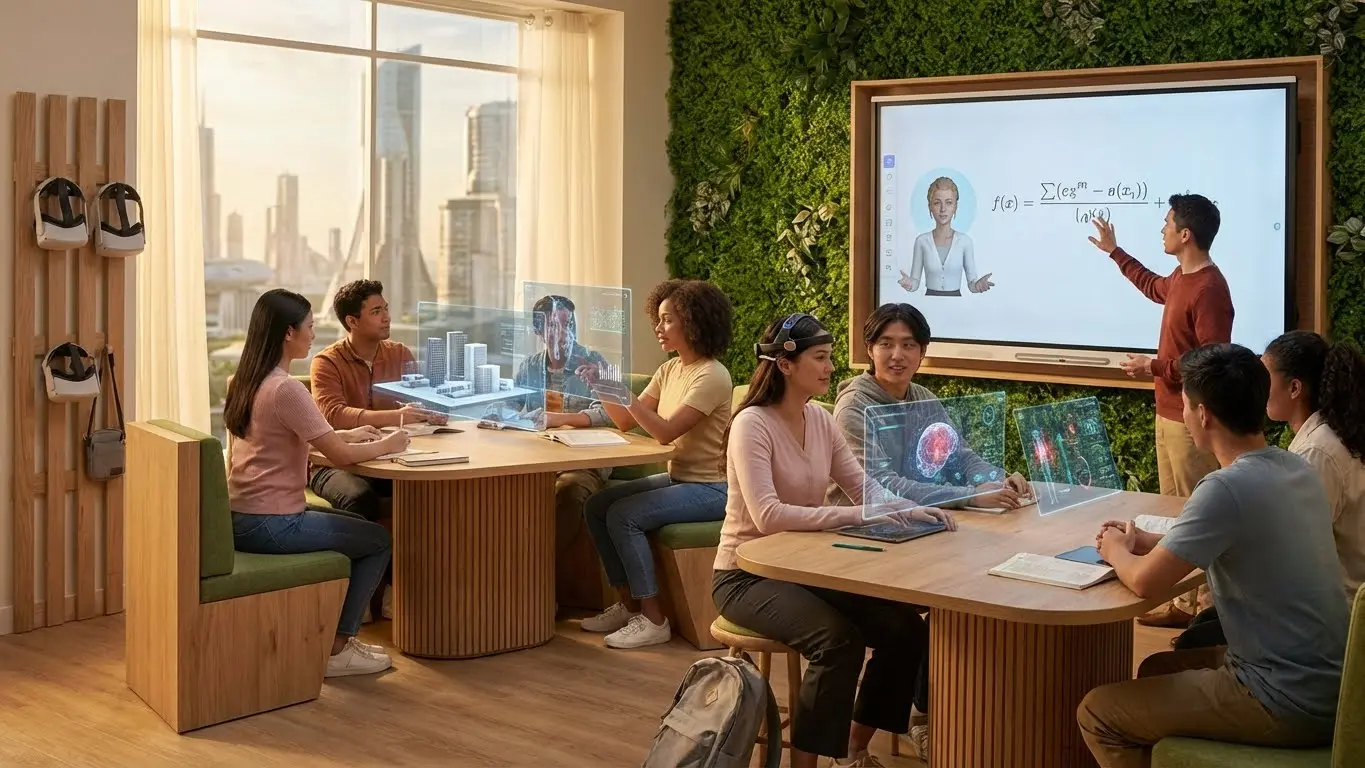
Discover the Benefits of Blended Learning in AI Era, enhancing education through personalized, efficient approaches that engage students and foster growth.
The Evolution of Education in the Artificial Intelligence Age
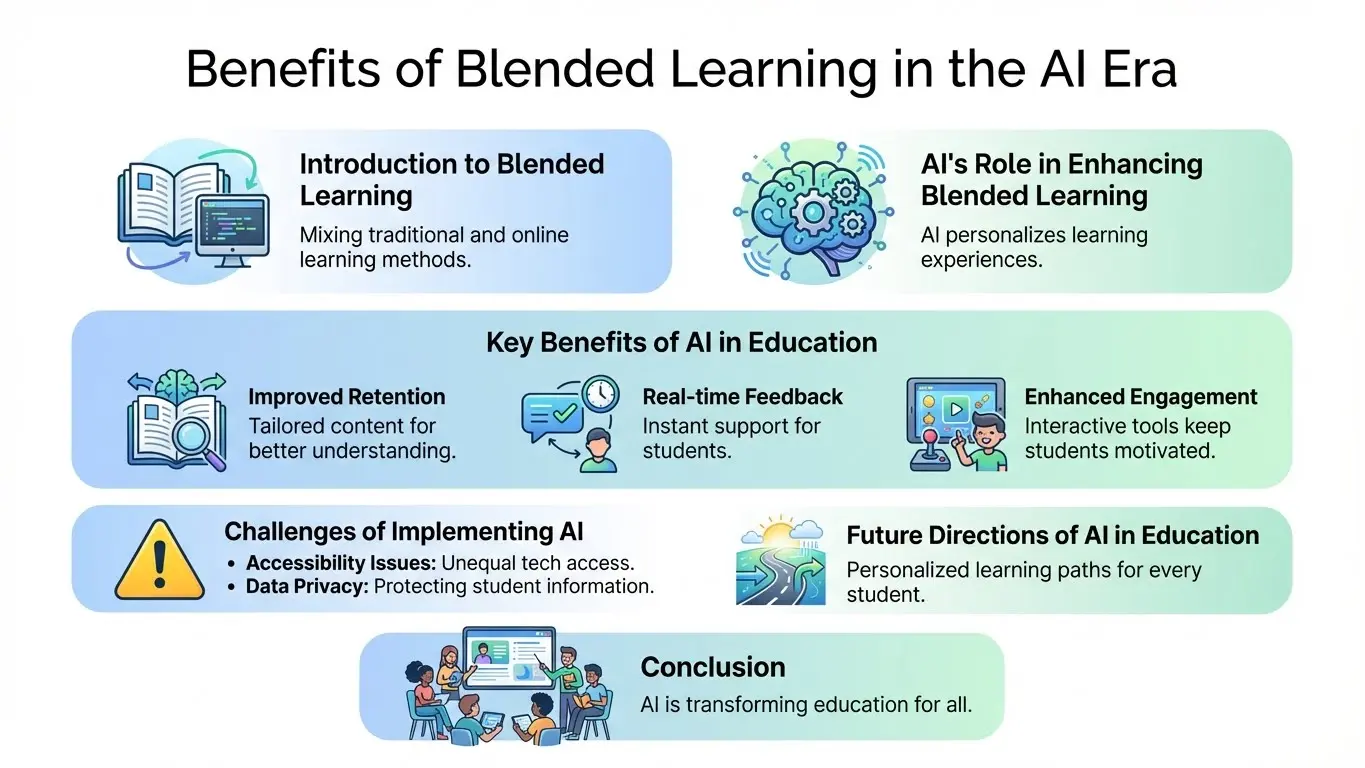
Learn how blended learning can be beneficial in the AI era by making education more engaging, personalized, and efficient. The way we educate has changed drastically in the last ten years, and blended learning is the main instructional model in the AI era that has been widely adopted. This pedagogical approach contains the best features of the traditional face-to-face instruction method combined with the latest digital technologies powered by artificial intelligence.
As a result of the Fourth Industrial Revolution, AI is everywhere in our lives, and it is very important for teachers, school leaders, and decision-makers to figure out how these technologies can improve learning outcomes. The use of AI in blended learning situations leads to the creation of very close relationships between human teachers and intelligent systems, which in turn result in educational experiences that are more personalized, efficient, and have a greater impact than ever before.
Defining Blended Learning in the Contemporary Context
The Core Components of Modern Blended Learning
Artificial intelligence is the main support of current blended learning systems. It is equipped with features that go beyond just the simple digitization of content.
These smart systems continuously monitor educational data of huge volumes and in real-time, they adjust the learning resources to each student’s profile, and they open the doors to student performance metrics like never before. The benefits of blended learning in the AI era are not limited to academic performance only. They also extend to the development of skills, emotional intelligence, and career readiness, thus generating holistic educational experiences that prepare learners for the intricacies of the 21st-century labor market.
- AI-Enhanced Content Delivery: Algorithms having intelligence analyze the patterns of students’ engagement to remodel the way content is presented in order to achieve the best results
- Adaptive Assessment Systems: Machine learning models perpetually evaluating student performance to decide the difficulty level of a question and the area of focus, adjust the question type and subject accordingly
- Predictive Analytics: Deep learning models predict educational outcomes and highlight those students who are in danger of dropping out long before teachers can notice them
- Automated Administration: Conversational agents powered by artificial intelligence comprehend and resolve users’ inquiries and also perform administrative tasks thus allowing teachers to have different kinds of interactions rather than routine ones
Historical Progression Toward AI-Enhanced Education
The advantages of blended learning in the AI era are, on the one hand, fully revealed through its extremely capable personalization features. While conventional methods provided only a little differentiation, AI-powered systems generate entirely different learning paths for every student and, at the same time, they do not reject the social and collaborative nature of classroom environments.
| Era | Technology | Pedagogical Approach | Limitations |
|---|---|---|---|
| 1990-2000 | Basic Computer Labs | Supplemental digital practice | Limited interaction capabilities |
| 2000-2010 | Learning Management Systems | Online content management | Minimal adaptive capabilities |
AI-Powered Personalization: Revolutionizing Individual Learning
The Mechanics of Adaptive Learning Systems
Adaptive learning technology is at the core of AI-powered blended learning, which can bring about personalized educational experiences on a large scale. Such systems use machine learning algorithms that consider a variety of data points for each learner:
- Knowledge base and skills across different areas
- Reaction times and mistake patterns
- Preferred learning modalities (visual, auditory, kinesthetic)
- Engagement metrics with different content types
- Social learning behaviors in collaborative activities
Case Study: Mathematics Proficiency Through AI Personalization
A comprehensive research carried out in 50 schools provided evidence that AI-driven blended learning is beneficial in the teaching of mathematics.
Students who used AI-powered adaptive platforms improved their standardized test scores by 43% more than students in the control groups who continued with traditional blended learning approaches. The main reasons behind these results were:
- Precision Remediation: AI systems identified specific conceptual misunderstandings rather than general topic weaknesses
- Dynamic Scaffolding: The difficulty of the problems was automatically adjusted according to the user’s performance in real-time, but the problems still contained the appropriate level of challenge
- Multimodal Explanation: If students were having trouble understanding a concept, the system would provide a different explanation in a video, an interactive simulation, or a real-world application
- Predictive Intervention: The algorithms could identify potential learning difficulties long before the human teachers could recognize the patterns
Enhancing Educational Accessibility Through AI Innovation
Breaking Down Barriers to Learning
Blended learning with AI has very important benefits for educational accessibility as well. Intelligent systems are able to do things that were traditionally considered the limitations of education. AI technologies can support the diversity of learning needs by employing several approaches such as:
- Real-Time Translation: Natural language processing can facilitate material translation into multiple languages instantaneously
- Accessibility Features: Computer vision can help describe images to the visually impaired, and speech-to-text can be useful for people with motor difficulties
- Cultural Adaptation: The algorithms help by adjusting examples and contexts to match the learners’ cultural backgrounds
- Economic Democratization: The provision of AI services on the cloud can considerably lower the infrastructural cost that would otherwise be required for computer labs
| Region | Initiative | Impact |
|---|---|---|
| Global South | Mobile-first learning platforms | 32% increase in educational access |
| Urban Centers | AI-assisted special education programs | 41% improvement in learning outcomes |
Real-Time Feedback Systems: Transforming Assessment
The Shift From Periodic to Continuous Evaluation
Traditional education systems depended on constructions for the assessment of the students that were spaced in time and provided outdated glimpses of students’ comprehension.
The advantages of blended learning in the AI era are voiced by the comprehensive feedback systems that can offer:
- Instant performance analysis during learning activities
- Emotional state recognition through interaction patterns
- Personalized improvement strategies generation
- Continuous knowledge growth tracking
AI Feedback vs. Traditional Grading: A Comparative Analysis
| Feature | Traditional Systems | AI-Enhanced Systems |
|---|---|---|
| Response Time | Days/Weeks | Real-Time |
| Personalization | Generic | Hyper-Personalized |
Optimizing Teacher Effectiveness With AI Assistance
Redefining the Educator’s Role in AI-Enhanced Classrooms
Contrary to the worries of AI displacing teachers, the benefits of blended learning in the AI era contribute to the teaching profession growth in the following ways:
- By performing tasks that are part of the teacher’s administrative duties (attendance, grading, reporting), AI frees the teacher’s hands
- In addition, detailed analytics can be an invaluable tool for making instructional decisions
- The spotlight can be also put on learner’s single and group hepatic patterns
- Once a target intervention area has been identified, there is the possibility of automated generation of intervention strategies
- Assistance may also come in the form of pre-prepared learning material tailored to students’ needs and interests
Professional Development Through AI Analytics
The advantages of blended learning in the AI era are not only limited to teacher instruction through a profound understanding of teaching effectiveness metrics and data insights produced by the AI system.
- Interaction Analytics: Student-teacher relationships mapped through engagement patterns
- Strategy Effectiveness Scoring: The degree to which one can measure the influence of various teaching styles or strategies
- Peer Benchmarking: A comparison of one’s performance level with that of other similar classrooms, keeping everyone anonymous
- Micro-Credential Recommendations: Individually tailored paths of professional learning
The Cognitive Science Behind AI-Enhanced Learning
Aligning Technology With Brain-Based Learning Principles
The strongest advantages of blended learning in the AI era come from carefully coordinating it with research in cognitive science. Contemporary AI systems follow many principles of user education derived from the rigorously tested scientific research:
- Spaced Repetition: Algorithms determining the best review timing for memory retention
- Interleaved Practice: Intelligent mixing of related concepts for better understanding
- Multisensory Encoding: Content presentation adaptation based on learning preferences
Neuroscientific Validation of AI Pedagogies
| Cognitive Function | AI Enhancement | Measured Improvement |
|---|---|---|
| Information Retention | Adaptive review scheduling | 27% increase |
Ethical Considerations in AI-Enhanced Learning Environments
Building Responsible AI Systems for Education
As educational institutions implement AI technologies, addressing ethical concerns becomes paramount to realizing the full benefits of AI-enhanced education. Key considerations include:
- Algorithmic fairness audits across diverse student populations
- Robust data protection protocols for learner information
- Transparent decision-making processes for AI systems
Frequently Asked Questions (FAQs)
How does AI actually improve learning outcomes?
AI enhances learning outcomes through several interconnected mechanisms. Machine learning algorithms process thousands of data points per student to identify optimal learning pathways that human instructors couldn’t detect manually. These systems adapt content difficulty, presentation style, and pacing in real-time to maintain ideal challenge levels – a concept educational psychologists call the “zone of proximal development.”
What safeguards exist against AI bias in education?
Reliable educational AI systems implement various measures that resist bias:
- Diverse Training Data: Models trained on global datasets representing various demographics
- Continuous Auditing: Third-party algorithms monitoring system outputs
- Human Oversight: Teacher approval requirements for significant recommendations
How does AI address different learning styles?
| Learning Style | AI Adaptation |
|---|---|
| Visual Learners | Interactive infographics and diagrams |
| Auditory Learners | Voice-controlled navigation systems |
Also Read: How AI-Powered Tech Solutions Are Revolutionizing Business Operations