




Tools For Analyzing Featured Snippet Performance AI-Generated Answers

The Changing World of Search Results
Search engine results pages have become completely different animals in recent years. Where we used to see simple blue links, now we get instant answers displayed right at the top of the page – before you even scroll down. These answer boxes come in different flavors these days. There’s the traditional featured snippets that pull information from a single webpage, and then there’s these new AI-generated answers that combine information from multiple sources.
Why Tracking Performance Matters More Than Ever
With all these changes in how information gets displayed, marketers and website owners need new ways to measure what’s working. The old tools that just tracked your position in search results don’t cut it anymore. You need to know:
- How often your content appears in answers
- Whether the AI summaries accurately represent your content
- How these appearances translate to actual website visits
- Which types of answers perform best for your industry
Without proper measurement, you’re essentially flying blind in today’s search landscape. You might think you’re doing well because you rank high, but if your content isn’t being featured in these answer boxes, you’re missing out on massive amounts of traffic.
Essential Analytics Tools You Should Be Using
To keep up with these changes, you need specialized tools that go beyond basic ranking reports. Here are some of the most powerful options available today:
1. Comprehensive SEO Platforms
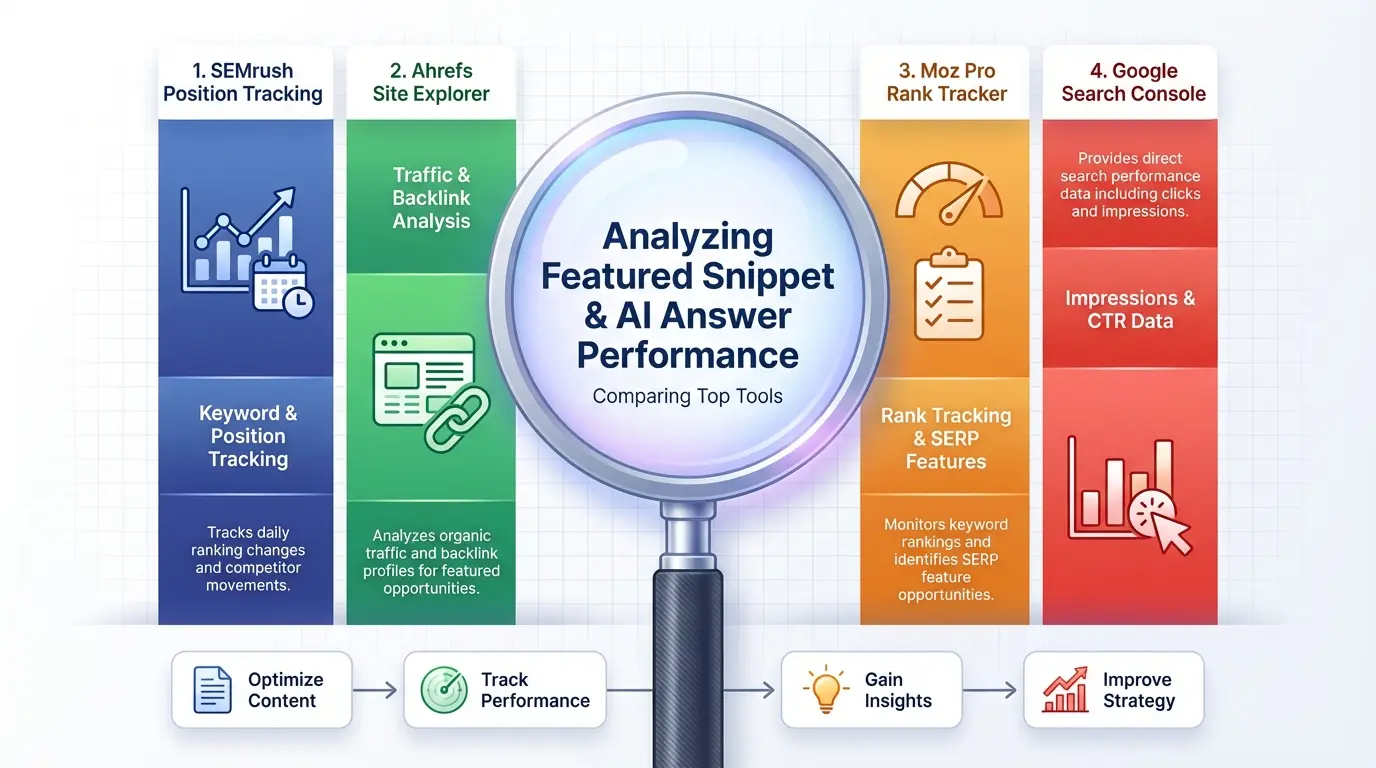
The big players in SEO software have all adapted to these changes. Advanced platforms like SEMrush and Ahrefs now offer special features for tracking your performance in answer boxes. These tools can:
- Track how often your content appears in featured snippets
- Monitor mentions in AI-generated summaries
- Analyze the accuracy of how your information gets presented
- Compare your performance against competitors
| Feature | Basic Plan | Professional Plan | Enterprise Plan |
|---|---|---|---|
| Snippet Tracking | ✓ | ✓ | ✓ |
| AI Answer Monitoring | ✓ | ✓ | |
| Sentiment Analysis | ✓ |
2. Specialized Snippet Tracking Tools
Beyond the major platforms, there are niche tools specifically designed for monitoring featured snippet performance. Platforms like SnippetTracker and AnswerAnalytics focus exclusively on position zero results. These tools provide extremely detailed insights including:
- Real-time alerts when you gain or lose snippets
- Historical performance trends
- Content optimization suggestions
- Competitor snippet analysis
The depth of information these specialized tools provide can be invaluable for serious SEO professionals. They often catch changes and opportunities that general platforms might miss.
Optimizing Content for Modern Search Results
Creating content that ranks well today requires a different approach than just a few years ago. Here are the key strategies you should implement:
Structuring Content for Machine Readability
The way you organize information on your page has never been more important. Both featured snippets and AI answers rely on clear, well-structured content. Here’s how to optimize:
- Start with a clear question that users might search
- Provide a concise answer in the first paragraph
- Use headings to break down supporting information
- Include bullet points and numbered lists
The Role of Structured Data
Schema markup has become increasingly important for getting featured in rich results. By adding specific tags to your content, you make it easier for search engines to understand and display your information. Key schema types include:
| Schema Type | Best For | Implementation Difficulty |
|---|---|---|
| FAQ | Question/answer content | Easy |
| How-To | Instructional content | Medium |
| Recipe | Cooking content | Medium |
Implementing these schemas properly can significantly increase your chances of being featured in answer boxes. However, it’s important to follow best practices – misusing schema markup can actually hurt your rankings.
Measuring Content Performance Effectively
To understand whether your optimization efforts are working, you need to track the right metrics. Here’s what to focus on:
Key Performance Indicators
Traditional metrics like rankings and click-through rates still matter, but you need additional measurements:
- Snippet appearances versus regular rankings
- Impression share in answer boxes
- Traffic from answer box results
- Bounce rates from answer-driven traffic
Comparing these metrics month-over-month gives you a clearer picture of how your featured snippet strategy is performing. Some SEO experts suggest creating a separate dashboard specifically for tracking answer box performance.
“The most successful content strategies today treat featured snippets and AI answers as separate channels that require their own optimization approach.” – Sarah Johnson, Lead SEO at SearchMetrics
Advanced Analysis Techniques
Beyond basic metrics, sophisticated SEOs are using techniques like:
- Heat mapping to see how users interact with answer-box traffic
- A/B testing different answer formats
- SERP position correlation analysis
- Competitor gap analysis for answer opportunities
These advanced approaches can uncover opportunities that basic tracking might miss. For example, heat mapping might reveal that visitors from featured snippets engage more deeply with certain types of content, helping you optimize future pages.
The Future of Featured Snippets and AI Answers
As search engines continue evolving, we can expect even more changes to how answers get displayed. Here’s what industry experts predict:
Increased Personalization
Search results will become more tailored to individual users based on their search history, location, and preferences. This means that two people searching for the same thing might see different answers based on their personal context.
Multimodal Results
Answers will increasingly combine text, images, and video. For example, a search about “how to tie a tie” might show a video answer alongside step-by-step text instructions. Optimizing content in multiple formats will become essential.
Voice Search Integration
With more people using voice assistants, featured snippets need to be optimized for spoken responses. This means creating content that sounds natural when read aloud and answers questions concisely.
| Trend | Timeframe | Impact Level |
|---|---|---|
| Personalized Answers | 1-2 years | High |
| Multimedia Answers | Now | Medium |
| Voice Optimization | Now | High |
FAQs About Featured Snippet Analysis
How often should I check my featured snippet performance?
Most experts recommend monitoring your featured snippet positions at least weekly. The search landscape changes rapidly, and being proactive helps you maintain your positions. Tools with automated tracking can alert you to significant changes in real time.
Can I optimize older content for featured snippets?
Absolutely! In fact, updating older content is one of the most effective strategies. Start by identifying posts that already rank well but aren’t getting featured in answers. Then implement the optimization techniques we’ve discussed – adding clear answers, improving structure, and implementing schema markup.
How long does it take to see results from featured snippet optimization?
While some changes might show results within weeks, most comprehensive optimizations take 3-6 months to fully impact your snippet appearances. It takes time for search engines to recrawl your content and reassess its relevance for featured positions.
Putting It All Together
Mastering featured snippet and AI-answer optimization requires ongoing effort and attention. By using the right tools, implementing best practices, and staying informed about industry changes, you can dramatically improve your visibility in these valuable search positions. Remember that success comes from continuous improvement rather than one-time optimizations.
For the latest AI developments, see how Japan’s approaching AI regulation could impact search technology globally.