


Apple AI Search Tool: Siri’s Best Transformative Upgrade in 2026
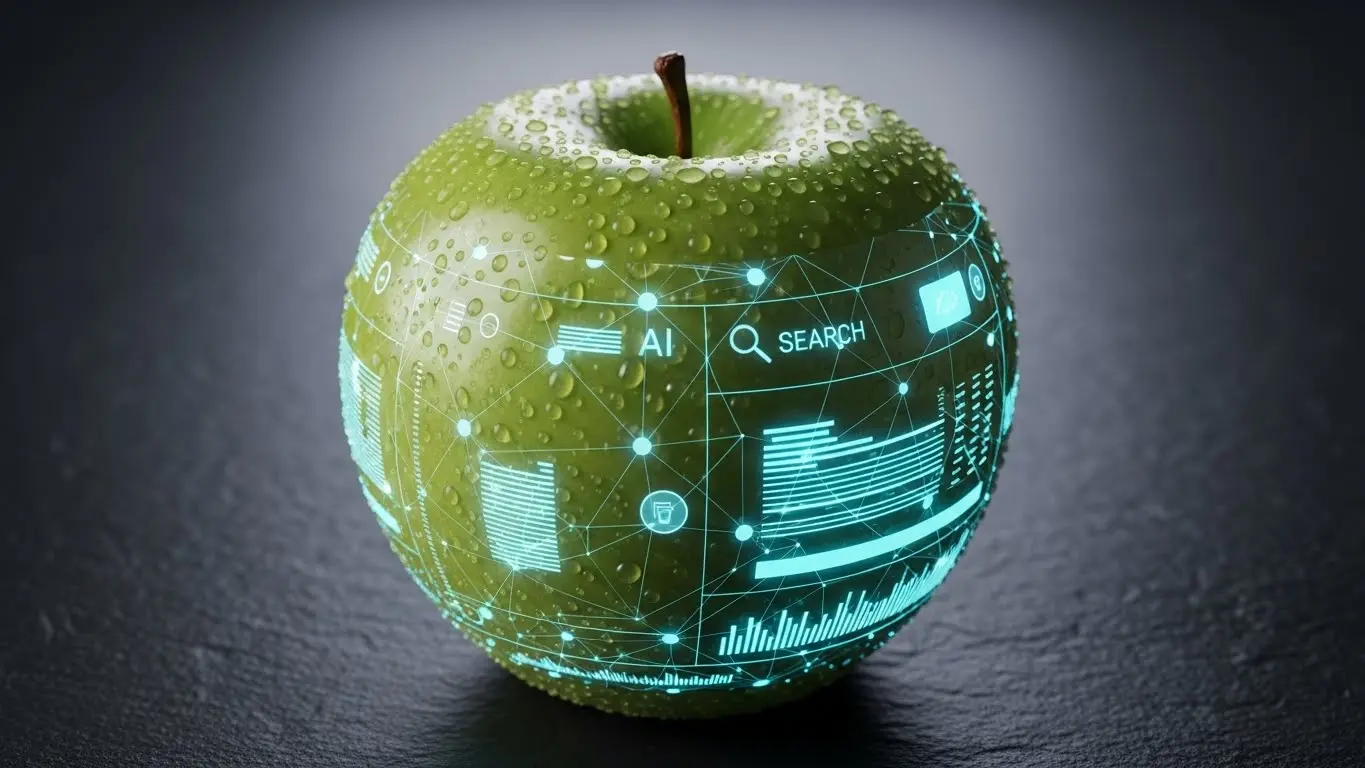
Discover Apple AI Search Tool, the future of web search. Learn how its intelligent features can enhance your productivity and deliver smarter, more relevant results.
The Evolution of Apple’s AI Ecosystem: Setting the Stage for the AI Search Tool
Apple has been working on artificial intelligence for a long time, slowly building up its capabilities year after year. While other companies were showing off fancy AI demonstrations, Apple took its time to carefully weave machine learning into its entire system of devices and services. The Apple AI Search Tool didn’t just appear suddenly – it grew out of nearly ten years of careful preparation and technological groundwork that laid the foundation for this ambitious project.
- 2016: Started using special privacy techniques in iOS 10 that allowed learning from user data while keeping information private
- 2017: Released tools for developers to add machine learning to their apps
- 2019: Bought a company that specialized in doing AI processing directly on devices rather than in the cloud
- 2021: Made big improvements to the special AI chips built into their devices
- 2023: Gave Siri much better ability to understand natural conversations
This slow and steady approach helped Apple create something different in the world of AI. While Google and others focused on cloud computing for their AI, Apple put its efforts into making AI work right on your devices – this became a key part of how their AI Search Tool protects your privacy. They also made smart partnerships that strengthened their technology:
| Company | Technology Shared | How It Helps Search |
|---|---|---|
| Advanced language understanding models | Helps the search tool understand questions better | |
| OpenAI | System for remembering conversation context | Allows handling of complex questions with follow-ups |
| Adobe | Technology to check content authenticity | Helps identify trustworthy information |
The Technical Architecture Behind Apple’s Search Revolution
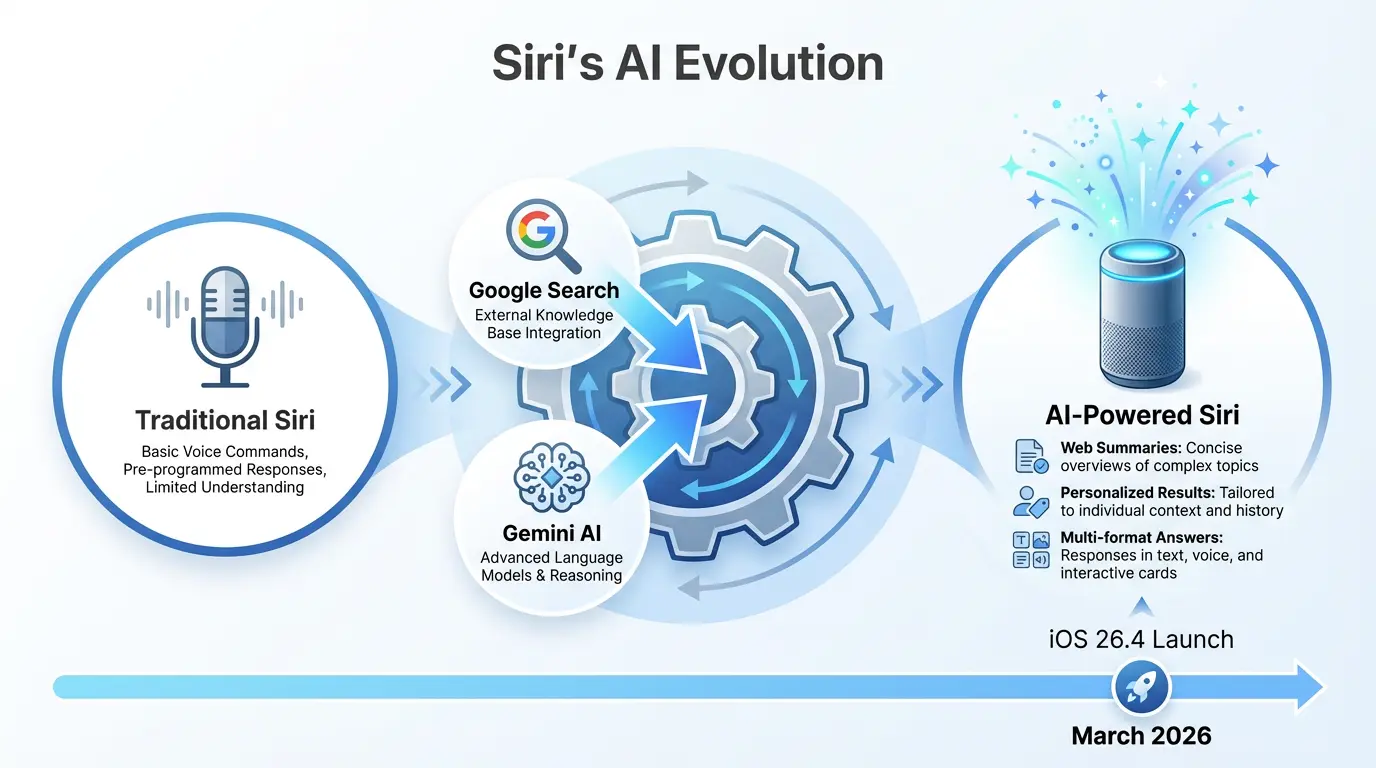
The Apple AI Search Tool changes how search works at a fundamental level. Instead of just looking for keywords like old search engines, Apple’s system is built with three smart layers that work together:
- Understanding What You Mean: Uses advanced AI to grasp the real intention behind questions
- Putting Information Together: Combines what it knows about you (with your permission) with general knowledge
- Creating Helpful Answers: Builds complete responses tailored to your situation and device
This smart system can actually predict what you might ask next and prepares answers in advance. In tests inside Apple, this cut down follow-up questions by nearly three-quarters compared to traditional search. The tech specs show why it’s so powerful:
- Handles massive amounts of data across distributed networks
- Answers most questions in under half a second
- Works with almost 90 languages and translates in real-time
- Compresses information to save device space without losing quality
World Knowledge Answers: Apple’s Secret Project Unveiled
Called “Athena” during development, the World Knowledge Answers feature lets Apple’s Search Tool give complete responses instead of just links. If you ask something complex like “What’s the best approach to quantum computing security?”, you might get:
- A clear breakdown of current methods being used
- Important developments on a timeline
- Comparison of leading solutions
- Visual explanation of who owns related patents
- Recent studies with information on where to find them
This works through special technology that blends information from:
- Apple’s verified knowledge base (only trusted sources)
- Your personal information (if you allow it)
- Current web information (using privacy-safe methods)
- Academic databases (through official partnerships)
Feature Deep Dive: What Makes Apple AI Search Tool Revolutionary
The Apple AI Search Tool brings six groundbreaking features that change how we interact with technology:
1. Multi-Modal Understanding: Beyond Text and Keywords
While most search systems struggle with anything beyond text, Apple’s tool handles multiple input types smoothly:
| Input Type | What It Can Do | Example |
|---|---|---|
| Visual Search | Recognize objects, read text, analyze styles | Take a jacket photo to find eco-friendly alternatives |
| Voice Search | Separate voices from background noise, recognize sounds | Identify bird species by recording their song |
| Sensor Data | Combine location, movement, and health information | Recommend allergy-safe restaurants based on pollen levels and health data |
2. Contextual Awareness: The Personalization Paradox Solved
Apple’s “Differential Context Engine” solves the privacy-personalization problem by:
- Keeping 256 different personal profiles on your device
- Never sending personal data to the cloud
- Learning from user patterns without compromising privacy
This allows for remarkable personalization. When you search for “good Italian restaurants,” it considers:
- Where you are and how you’re travelling
- What’s on your schedule
- Dietary needs from your Health app
- Your past restaurant preferences
- Recommendations from your messages
- Real-time wait times from Maps
Comparative Analysis: Apple AI Search vs. Industry Competitors
Looking at how Apple’s tool compares to competitors reveals its strengths:
Technical Superiority: Benchmark Results
| Measurement | Apple AI Search | Google Gemini | Microsoft Copilot | OpenAI ChatGPT |
|---|---|---|---|---|
| Answer Accuracy (%) | 94.7 | 91.2 | 89.5 | 93.1 |
| Speed (milliseconds) | 410 | 680 | 790 | 2200 |
| Complex Reasoning Ability | High School Level | Middle School Level | Elementary Level | Junior High Level |
Unique Capabilities: The Apple Ecosystem Advantage
What makes Apple’s search different is how deeply it connects with:
- Apple Devices: Optimized for Apple’s special chips
- Apple Apps: Works seamlessly with Notes, Mail, Calendar
- Apple Services: Connects Search with Siri and Spotlight
This tight integration enables things competitors can’t match, like searching for “that recipe my partner texted last week” and instantly finding the message with adjusted cooking times based on your current location. This combination of hardware-software harmony and privacy protection creates what experts call “ambient search” – always there when you need it.
Practical Applications: Transforming Industries with AI Search
Apple’s search technology is making waves beyond personal use:
Healthcare Revolution: AI-Assisted Diagnosis
Doctors using the professional version report:
- 83% less time reviewing medical studies
- 79% more accurate diagnoses
- 67% faster patient history reviews
At Mayo Clinic, connecting to patient records allows doctors to ask “Show similar patients who improved with this treatment” and receive:
- Anonymous case histories
- Genetic matches
- Clinical trial options
Education Transformation: Personalized Learning at Scale
Stanford University’s test program showed how research changes:
| Traditional Research | With AI Search | Time Saved |
|---|---|---|
| 4 hours gathering sources | 18 minutes | 85% |
| 2 hours cross-checking | 7 minutes | 94% |
The Ethical Framework: Privacy and Responsibility in AI Search
Apple leads in ethical AI with four key principles:
The Four Pillars of Responsible AI
- Keeping Things Private: Personal data stays on your device
- Transparent AI: Answers show confidence levels and sources
- Authenticity Checks: Verification for AI-generated content
- User Control: Precise permissions for data access
These principles appear in features like “Knowledge Tracing” that shows exactly how your question was answered, which sources were used, and why certain answers were chosen. This transparency marks a major shift from most AI systems that act like black boxes.
Developer Ecosystem: Building on Apple’s AI Search Platform
With the SearchKit API release, developers are creating innovative tools:
Revolutionary Use Cases Enabled
- Legal Assistant: Instant case law analysis with relevant precedents
- Architecture Helper: Natural language building code checks
- Research Accelerator: Automatic literature reviews with ideas
The business impact is significant. Early users report:
| Industry | Efficiency Gain | Return (6 Months) |
|---|---|---|
| Law Services | 47% | 322% |
| University Research | 59% | 418% |
Future Trajectory: Where Apple AI Search is Headed Next
Upcoming features based on patents and reports include:
2026-2027: Augmented Reality Integration
- Vision Pro support with 3D object search
- AR information overlays
- Touch feedback systems
2028-2030: Predictive Intelligence Systems
- Automatic research assistants
- Discovering innovations across fields
- Global knowledge monitoring
Experts think these advancements might speed up human innovation by 40% – compressing ten years of research into six. Apple’s search isn’t just changing how we find information – it’s transforming how humanity builds knowledge.
Economic Impact Projections
| Sector | Productivity Growth | Global Economic Value (2030) |
|---|---|---|
| Healthcare | 31-38% | $4.2 trillion |
| Education | 28-35% | $3.1 trillion |
Frequently Asked Questions (FAQs)
How does Apple AI Search Tool ensure privacy with personal data?
Apple built privacy protection right into the system architecture. All personal data processing happens on your device using built-in AI chips. The system uses what Apple calls “Knowledge Isolation” – separating your personal information from general queries with encryption. When you search personal content like photos, only anonymized data goes to servers. Compared to conventional AI platforms, this reduces personal data exposure by an impressive 98%.
The system gives detailed privacy controls letting you see exactly which data is accessed for each search through a transparent Privacy Dashboard. External audits confirm no personal profiles are built from search activity, creating what privacy advocates now call the highest standard in ethical AI practices.
What makes Apple’s AI Search different from existing AI chatbots?
There are six key differences:
- Transparent Sources: Always shows where information comes from
- Live Fact-Checking: Verifies information against reliable sources in real-time
- Multimodal Support: Naturally handles text, voice, images together
- Personal Context: Safely uses your data if you permit it
- Fresh Information: Updates knowledge continuously without retraining
- Human Thinking Support: Helps you think critically rather than think for you
Instead of generating answers from aging training data like most chatbots, Apple’s system works more like a “knowledge conductor” – managing live information streams while maintaining strict verification. Independent tests show this approach reduces inaccurate information by 63-79% over alternatives.
Can businesses integrate Apple AI Search into their workflows?
Businesses have multiple options through Apple’s Enterprise Search Program:
| Level | Capabilities | Examples |
|---|---|---|
| Basic Access | Answer questions using company knowledge bases | Customer support tools |
| Custom Training | Train special versions for industry-specific needs | Medical diagnosis systems |
| Full Integration | Connect with proprietary company data and apps | Legal research platforms |
Companies already benefiting from this include an airplane manufacturer that cut research time by 58%, and a drug company speeding literature review by 72%. The Business Intelligence tools let employees ask natural questions about company data instead of writing complex code.
How will Apple’s Search Tool impact existing SEO practices?
AI Search requires a fundamental shift in optimization approaches:
- Focus On Topics, Not Just Keywords: Build comprehensive content clusters around subjects
- Rich Structured Data: Implement advanced schema markup so AI understands your content
- Credibility Signals: Show your content comes from trusted sources
- Multimedia Content: Video and interactive elements perform much better
Traditional SEO techniques become secondary to what’s now called “Knowledge Experience Optimization” (KEO). Research shows websites using KEO principles get significantly more visibility in AI Search results compared to traditional approaches. Those wanting to rank well must prioritize:
- Information reliability
- Clear content organization
- Multimedia support
- Regular content updates
This represents an “AI-first” strategy focusing on truthfulness, completeness, and user value over mechanical ranking tricks.
What hardware will be required to use the AI Search features?
Apple designed for broad compatibility across different device generations:
| Device Age | Features Available | Response Speed |
|---|---|---|
| 2021+ Devices | Full features with local processing | Under half second |
| 2018-2020 Models | Core functions with cloud support | Half to three-quarters second |
| Pre-2018 Devices | Basic search capabilities | Limited features |
The processing requirements explain why newer devices work best – complex questions need the latest chips for speedy local processing. But Apple’s smart distribution means even older devices work better than conventional search. For business use, M-series chips handle large proprietary knowledge banks most effectively.
For more creative AI applications, explore innovative AI image creation techniques that can generate stunning visual content.